

















The Saudi-UAE clash is reshaping dynamics across Yemen and the Horn of Africa. Europe needs to pay attention as new alignments crystallise against what is increasingly framed as a UAE-Israel-Ethiopia axis.
By Camille Lons
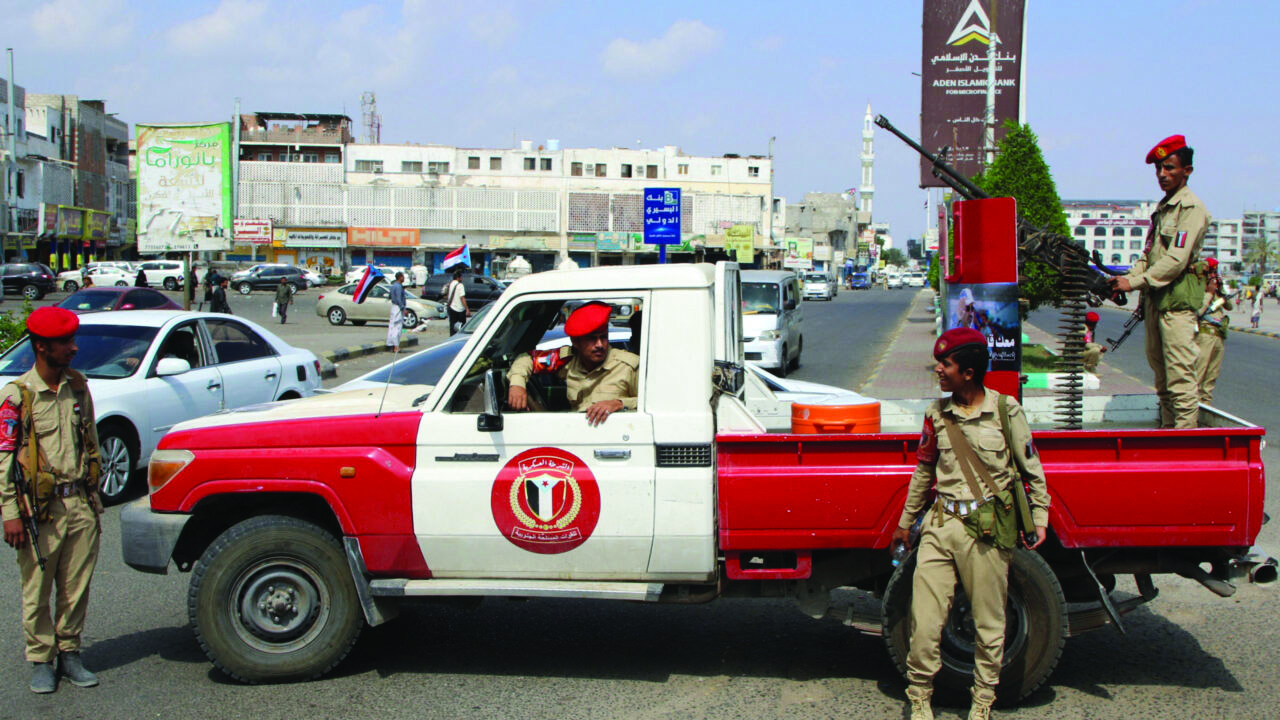
In late 2025, the Southern Transitional Council—a political Yemeni organisation backed by the United Arab Emirates—staged a military takeover of Yemen’s Hadhramaut and Mahra governorates. In response, Saudi Arabia launched a forceful diplomatic and military pushback, striking what it described as Emirati weapons supply routes. It also dissolved the STC and pushing the UAE to announce a full withdrawal from Yemen. After years of simmering competition between Riyadh and Abu Dhabi, their clash is having an impact beyond Yemen and into the wider Red Sea region. This is reshuffling regional alliances and threatening to further destabilise Red Sea geopolitics. The fall-out confirms the region as a persistent flashpoint, which Europeans need to monitor closely.
In parallel to the developments in Yemen, Saudi Arabia increased its pushback against Emirati actions in Sudan. International actors have accused Abu Dhabi’s support for the Rapid Support Forces (RSF) of helping prolong the civil war against the Sudanese Armed Forces (SAF). This has increasingly frustrated Saudi Arabia, which backs the SAF and has positioned itself, alongside the United States, as a supporter of mediation
efforts.
During Saudi Crown Prince Mohammed bin Salman’ visit to Washington in November 2025, he reportedly urged the Trump administration to increase pressure on the UAE over its role in Sudan. In the weeks that followed, Riyadh stepped up its material support to the SAF.
Israel recognises Somaliland
Israel’s recognition of Somaliland in late December 2025 has also caused turbulence: the move is widely expected to be linked to Somaliland’s authorisation of an Israeli military presence—or at least intelligence-gathering facilities—aimed at monitoring Houthi activity in Yemen. Many observers also suspect the UAE was involved in the decision. It has long maintained a substantial economic and security footprint in Somaliland, notably through its role in developing the port and airport of Berbera, and previously facilitated contacts between Israeli and Somaliland authorities.
This would not be the first time that the UAE has cooperated with Israel in the area. In 2021, the two countries participated in joint naval drills in the Red Sea and reportedly developed joint listening posts on the Yemeni islands of Perim and Socotra. The UAE also played a crucial intermediary role between Sudan and Israel to facilitate Sudan joining the Abraham Accords in 2021.
The UAE’s activities in Somaliland have long fuelled tensions with Somalia’s federal government in Mogadishu, which accuses the UAE of undermining Somalia’s territorial integrity. These accusations resurfaced in 2024 when Ethiopia threatened to secure access to the Red Sea via Berbera, echoing an earlier UAE–Somaliland–Ethiopia understanding on developing such a corridor.
Israel’s recognition of Somaliland is alarming officials in Mogadishu. They fear such a deal could revive Ethiopia’s ambitions towards Berbera, despite Somalia and Ethiopia securing a fragile peace deal in late 2024. The latest developments has seen Mogadishu, which notes the Emirati footprint behind the Israel-Somaliland rapprochement, call for a Saudi military intervention in Somaliland and announced the severing of ties with the UAE… Source: ecfr.eu/article/power-struggle