







In the previous issue, through our editorial, we pointed to an old yet bitter truth: might makes right. But today, circumstances have gone far beyond this proverb. Power is no longer just a stick in the hand; it has become a weapon that tramples entire systems. The real question is not why this is happening—the real question is: where and when will this stop?
In recent days, two issues have drawn extraordinary attention on the horizon of global politics. On one side, there is the delay in a possible attack on Iran, internal protests, and external analyses, all attempting to create the impression that the Iranian people have grown weary of their current system. There is even talk of efforts to bring the family of the former Shah of Iran, Reza Shah Pahlavi, back into the spotlight. The question remains: has a four-decade-old ideological system suddenly become the object of public hatred, or is all this merely the opening move of a much larger game?
On the other side, the world is witnessing yet another strange spectacle. Greenland—geographically a part of Denmark and located close to Canada—has suddenly become the focus of attention of former U.S. President Donald Trump. As usual, the justification is “national security.” The question is: what threat to America’s security could possibly be coming from Greenland? Have powerful countries now acquired the right to occupy any region of the world simply by attaching the label of security?
A few European countries have expressed temporary disagreement, but history bears witness that principles rarely stand firm for long in front of a superpower. The real truth is that Greenland is not just a small territory; it is a treasure trove of natural resources—uranium, oil, gas, and rare minerals. These are the real attractions, for which morality and sovereignty have been reduced to secondary considerations.
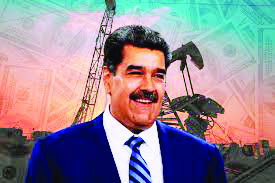
The same tragedy is visible in Pakistan, Sudan, and many African countries. Despite an abundance of natural resources, these states remain deprived of economic self-reliance. Why is that? The answer lies in the example of Saudi Arabia, where oil exploration began in 1935 through ARAMCO, and within a few decades a desert became a key player in the global economy. If such a model was possible, why did other countries fall behind? Because global powers desire control over resources—but never independent development.
Today, the Muslim world is passing through an extraordinary and all-encompassing crisis, where political instability, civil wars, economic collapse, and external interference are tightly intertwined. In some places, states are torn apart by internal divisions; elsewhere, people are crushed under the weight of poverty, inflation, and insecurity; and in many regions, direct or indirect intervention by global powers has further complicated matters. Iran, Sudan, Palestine, Yemen, and other regions could fall victim to major catastrophes at any moment. Most tragic of all is that Muslim states appear to be lined up against one another, as if shared pain, shared history, and shared interests have all been cast aside.
In such fragile circumstances, the role of the Organization of Islamic Cooperation (OIC), comprising 57 countries, has become a major question mark. No strong and united voice is heard, nor does any clear, practical, and effective strategy emerge to address the collective problems of the Ummah. Resolutions are passed and meetings are held, but no meaningful change is visible on the ground. Even the Islamic Military Alliance, led by former Pakistani Army Chief General (R) Raheel Sharif, is now being questioned in public and intellectual circles—whether it was truly established for the collective security, peace, and stability of the Muslim world, or whether it has been reduced to safeguarding specific state or regional interests. Amid all these questions, the core issue remains: without leadership, mutual trust, and a shared course of action, where is the Muslim world headed? And do existing institutions even possess the capacity to lead it out of this crisis?
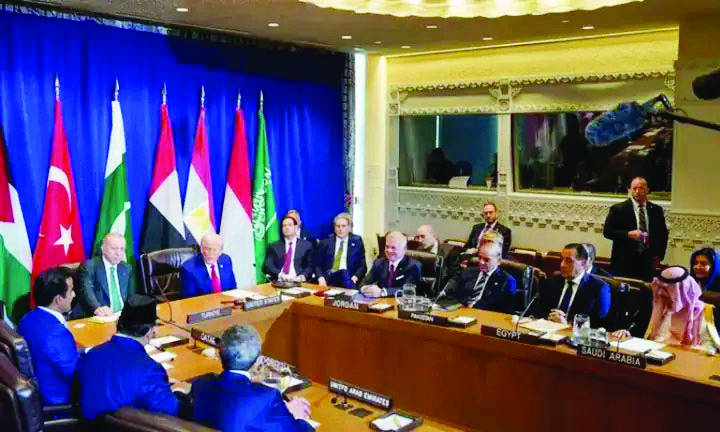
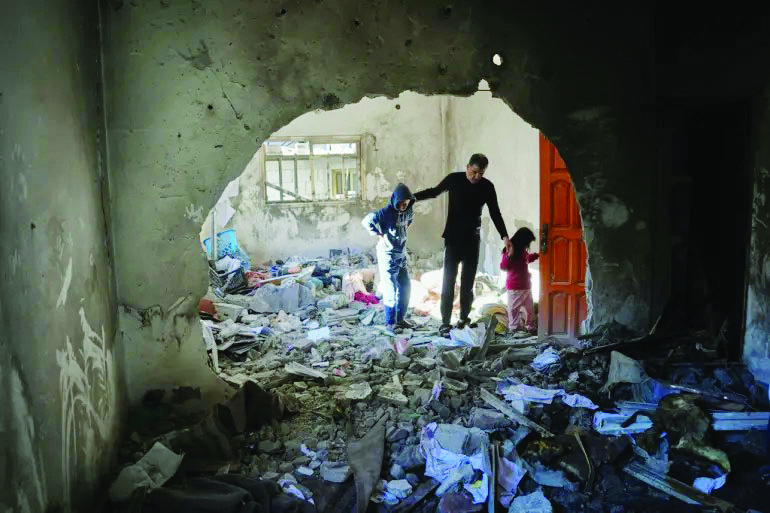
According to recent reports, a new economic game is being launched in the Gaza Strip under the banner of reconstruction and development, with the patronage of a superpower, where a membership fee of one billion dollars has been set. In other words, whoever pays a billion dollars becomes part of the decision-making. Is this not open trade? What kind of justice is it to keep one’s own people hungry in order to buy the pleasure of global powers? Membership in this council is being celebrated with pride, as if Palestine or Israel has been conquered. Not only the government of Pakistan but even some religious scholars are building bridges of praise over it. It is beyond comprehension that a country incapable of repaying a one-billion-dollar loan should take pride in membership of a council under whose watch Palestinians face further oppression and their lands continue to be seized.
Even more tragic is the fact that, against the oppressed people of Palestine, some Muslim countries are openly or silently providing financial support to protect Israel. In Pakistan, protests and demonstrations are not allowed, while people in other parts of the world are out on the streets. What is even more astonishing is that certain government circles, influential elites, and even some religious figures are viewing this silence as a success.
This world—and power itself—are both temporary. The tragedy is that we have learned nothing from history. If this path continues, characters like Trump will keep unleashing their calamities upon the world, while we, in anticipation of the real Day of Judgment, mortgage our honor, dignity, and future.
This is not just a moment for reflection—
It is a moment for shame.
Is this not the truth?
“Waan Laysa Lil
Insana illa ma’ sa’aa “
That man can have nothing but what he strives for.


