







“Might Makes Right”
This proverb has echoed in our ears for generations. As children, we may not have fully grasped its depth, but with age and experience, the truth becomes increasingly evident:
In this world, power is the ultimate deciding factor. Those who possess strength often render laws, principles, and rules meaningless.
This is true both on individual and collective levels.
Recent global events provide a stark illustration of this bitter reality.
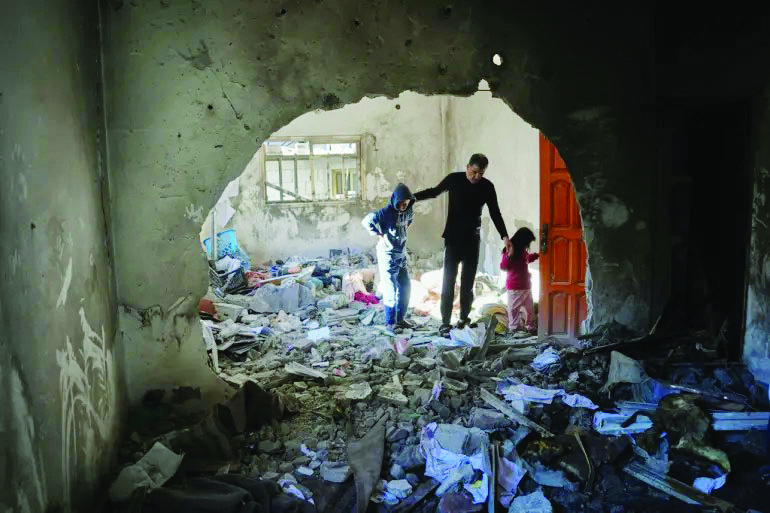
Powerful nations can, at will, strike any country, disregarding borders, sovereignty, and accountability. People—men, women, and children—become victims of the ambitions of the ruthless, and there often seems to be no one to stop them.
Consider another extreme:
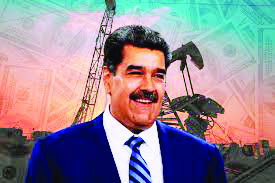
on January 3, the U.S. forces’ action to arrest Venezuela’s President Nicolás Maduro from his own residence sent a shocking message worldwide. This operation was not merely the arrest of one individual; it was a slap in the face to international law, sovereignty, and national dignity. A developed nation invaded its neighboring country as if it had the right to take such an extreme step.
Despite the magnitude of this incident, the global response was far from adequate. The reaction was limited to a few words, giving the impression that most countries are mere spectators.
Enduring oppression is nothing but supporting the oppressor,
Silence too becomes a form of backing.
Regrettably, even the Muslim world, encompassing 58 nations, and the rest of the global community could not play any meaningful role in this grave matter.
The United Nations, once seen as the guarantor of global peace and justice, now seems limited to convening meetings. Its resolutions and assemblies are neither taken seriously by powerful nations nor trusted by public opinion.
On Jan 5th, UN Secretary-General’s Statement
UN Secretary-General António Guterres emphasized that all UN member states must respect national sovereignty, political independence and territorial integrity, warning that the use of force without Security Council approval threatens international peace and security.
Whether ceasefire resolutions or appeals for human rights, all are often ignored under the pressure of power.
This incident clearly demonstrates that today, powerful states consider intervention in any country as their right. They can exploit resources, change governments, and exert influence over entire societies. Such actions might have been understandable in the distant past when civilizations were less developed, but today, in an age of supposed civilization and enlightenment, why do such injustices continue?
The wounds inflicted by previous acts of power—such as the devastation in Iraq and Syria for the sake of oil and dominance—had barely begun to heal, when now innocent lives are again lost in Palestine. Thousands of people have fallen victim to brutality, and millions have been displaced, with famine and suffering persisting. What kind of power remains indifferent to the cries of the weak, and what kind of silence emboldens tyranny?
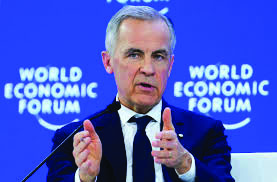
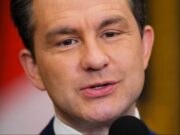
Prime Minister Mark Carney said ,the removal of Venezuela’s ‘illegitimate.
The outspoken condemnation of this action by New York’s newly elected mayor, Zehran Mamdani, was indeed courageous. Yet, the question remains: can mere statements halt global aggression?
A few European Union countries expressed disapproval, but practically, they too appeared powerless.
Even more concerning is the fact that U.S. statements referenced sensitive regions like Balochistan, without any subsequent denial, posing a serious reflection point for Pakistan and the Muslim world. If Venezuela could become a target today, any other nation could be next. Whether it is the Russia-Ukraine war or Israeli aggression in the Middle East, global powers are manipulating principles to suit their own interests.
Examining the current state of Muslim countries, the Saudi-Yemen conflict serves as a painful example. Yemen has long been trapped in civil war and external interventions, resulting in widespread famine, disease, and insecurity for its people. Meanwhile, Saudi Arabia, being a powerful state, is directly involved, leveraging its military and political advantage to worsen Yemen’s fragile economy and infrastructure.
The greatest suffering is borne by innocent civilians, while humanitarianism, Islamic brotherhood, and justice have been sidelined.
Is this the intoxication of power?
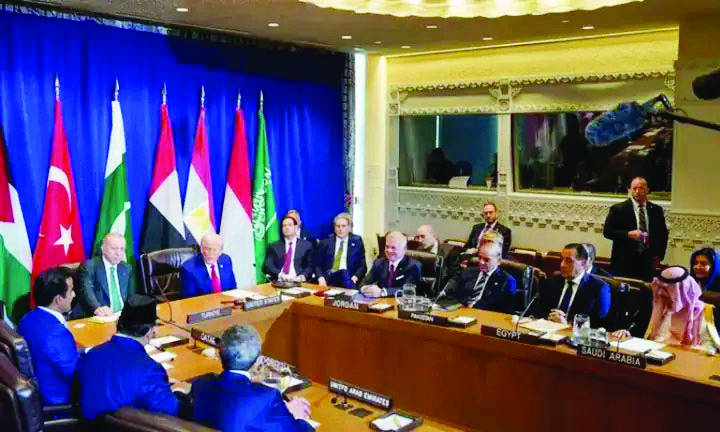
Within the Muslim world, UAE’s support for the other side in
Yemen has further complicated matters, pitting Saudi Arabia and the UAE against each other.
This is a worrying situation for Pakistan, given its relations and agreements—economic or otherwise—with both nations, which could potentially harm Pakistan if it sides with one over the other.
The lack of significant resistance during the attack on Venezuela indicates the deep influence already established there. Such behavior is pushing the global system toward chaos, instability, and continuous insecurity. Afghanistan, Iraq, and other examples show that military interventions often bring devastation rather than peace.
The beginning of 2026 is far from reassuring. If the principle of non-intervention continues to be violated, the threat of a third world war may no longer be mere speculation but a tangible danger.
On January 5, during a New York court hearing, the ousted Venezuelan President Nicolás Maduro and his wife Cilia Flores pleaded not guilty to charges of drug trafficking, terrorism, and weapons violations—they denied the accusations. The U.S. administration under President Donald Trump used these criminal allegations to justify their arrest and removal from American soil, despite
Maduro and his wife consistently denying involvement in drug smuggling. At this stage, it is premature to predict the outcome of the case.
This raises an extremely important question: are countries like Pakistan prepared for such scenarios? Do other developing and weaker nations have the capacity to defend their sovereignty, resources, and citizens?
Past events, particularly the Abbottabad operation near the Kakul Military Academy, against Osama bin Laden, continue to leave a question mark over our collective consciousness.
The Venezuelan military was intervening in every sector of the state within its own country. Under such circumstances, how can the defense of a nation be possible when national sovereignty is effectively mortgaged from within? The same situation can be observed today in Pakistan, where military generals—particularly those at the highest ranks—have exercised direct or indirect dominance over the country for decades.
Under the pretext of corruption, files and videos of so-called democratic leaders are kept in custody, to be used for blackmail whenever needed, thereby subordinating the political system to vested interests. The current military leadership has extended its influence into almost every sphere of life, severely disrupting the institutional balance of the state.
Meanwhile, the cultivation and smuggling of narcotics continue along the Afghanistan–Pakistan border, yet no effective strategy or serious voice is seen to address this issue. A pressing question remains in the public mind: who are the elements backing these activities, and why has no meaningful action been taken against them to date?
If power is everything, the only path for weaker and developing countries is mutual unity, strong internal stability, and a clear
national strategy.
They must use their own resources and manpower to craft strategies that shield them from the arrogance of major powers.
Otherwise, the principle of “might makes right” will turn the world into a jungle where only power speaks, and law is meaningless.
“Waan Laysa Lil
Insana illa ma’ sa’aa “
That man can have nothing but what he strives for.


