



















A little over a month ago, Canada and India were still negotiating a bi-lateral deal that would increase trade and expand investment between the two countries.
Now those talks have halted, Canada has implicated the Indian government in a murder on Canadian soil and, as of yesterday, India has ordered Canada to remove most of its diplomats(opens in a new tab) from the country. Nightly Briefing newsletter: Sign up for an in-depth look at the day’s most compelling news The origin of this growing tension goes as far back as the 1940s, and while relations between Canada and India are generally friendly and productive, a handful of events in the last 75 years or so have caused tensions to flare up periodically.Here’s how Canada and India got to this point and what’s at stake.
HARDEEP SINGH NIJJAR KILLING
Last month, Prime Minister Justin Trudeau said there were “credible allegations” of Indian involvement in the murder of Sikh activist Hardeep Singh Nijjar, who was gunned down outside a Sikh temple in Surrey, B.C..
For years, India alleged Nijjar, a Canadian citizen born in India, had links to terrorism. Nijjar was a prominent member of a political movement to create an independent Sikh homeland known as Khalistan, but denied having any links to terrorists. At the time of his murder, he was working with the group Sikhs for Justice to organize an unofficial referendum among the Sikh diaspora.
The Indian government quickly denied any involvement in Nijjar’s murder and the two countries have traded diplomatic barbs since then, most recently culminating in India demanding Canada reduce its diplomatic presence there.
Speaking to reporters after a Liberal caucus meeting on Oct. 3, Foreign Affairs Minister Melanie Joly said the two governments are in constant, private talks regarding an investigation into Nijjar’s death and the diplomatic fallout. ”In moments of tensions, because indeed there are tensions between both our governments, more than ever, it’s important that diplomats be on the ground and that’s why we believe in the importance of having a strong diplomatic footprint in India,” she said.
THE KHALISTAN MOVEMENT
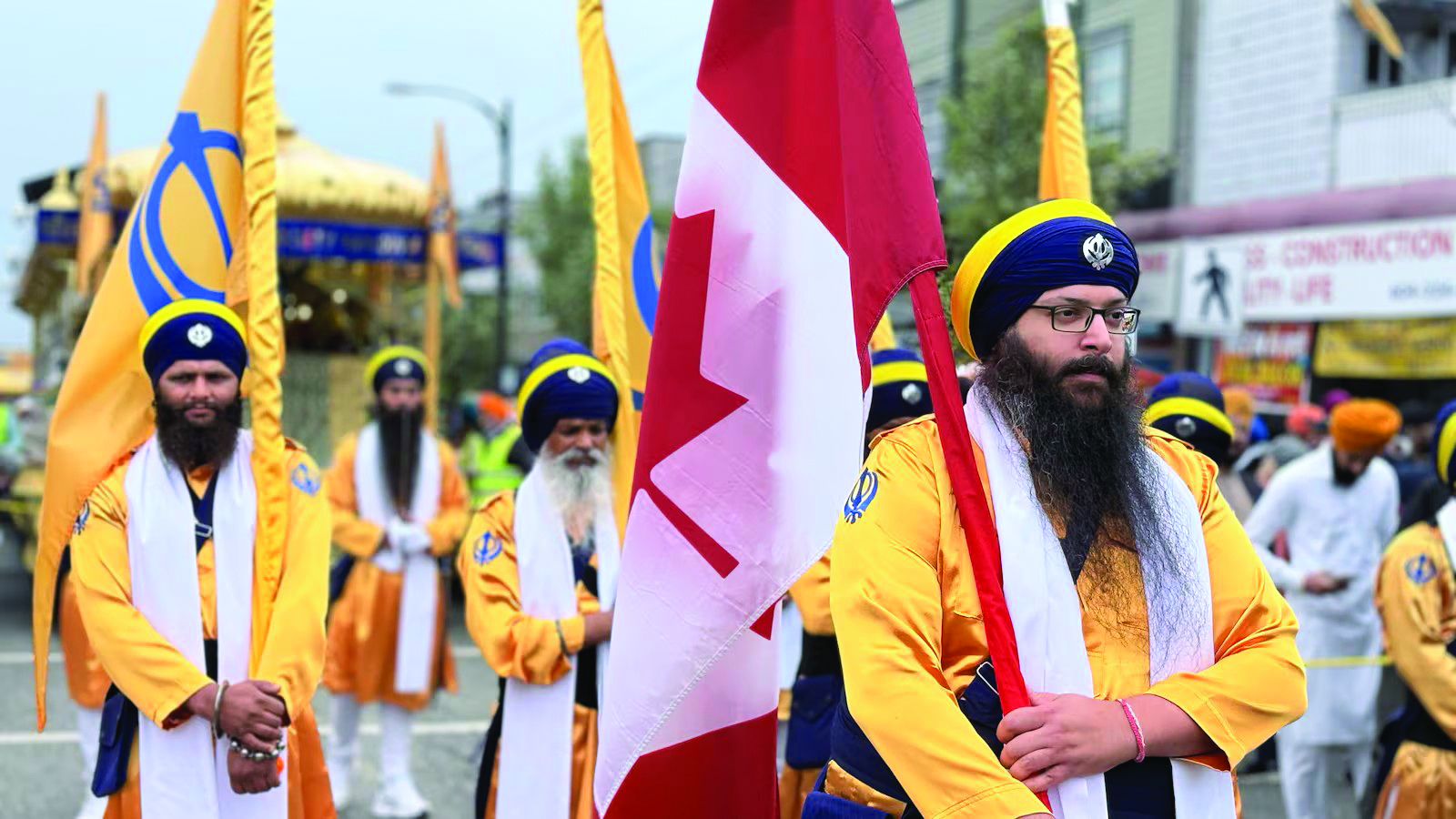
According to Maika Sondarjee, assistant professor of international development at the University of Ottawa, Canada’s friendliness – or lack of hostility – toward Sikh separatist activists has been a sore point for India for decades. Sikh separatists associated with the Khalistan movement first began moving to Canada in large numbers after the partition of India and Pakistan in 1947. When the two countries were separated, the Punjab region, which is home to most of the world’s Sikhs, was split into the Indian state of Punjab and the Pakistani province of Punjab.While Sikhs form the majority of people living in Punjab, they form only two per cent of India’s population of 1.4 billion. The modern movement to create a sovereign Sikh homeland called “Khalistan”(opens in a new tab) out of the state of Punjab emerged from negotiations preceding the partition, though Khalistan has never been recognized by the Indian government, which considers the movement a national threat.
“With the separatist movement came a lot of violence, and then with the violence, a lot of people left India,” Sondarjee told CTVNews.ca in a phone interview on Monday. “And so since then, Canada has been a land of welcome for Sikh separatists historically.”
In one especially violent chapter(opens in a new tab) of the Khalistan movement, the Indian Armed Forces in 1984 launched an assault on a number of Sikh holy sites in Punjab, including the Golden Temple, the holiest site of Sikhism. The raid, known as the Blue Star Operation, was intended to remove Sikh separatist militants from the sites. However, it resulted in the deaths of at least 493 civilians…Source: ctvnews.ca/
Sunday, April 19, 2026