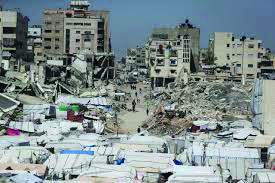














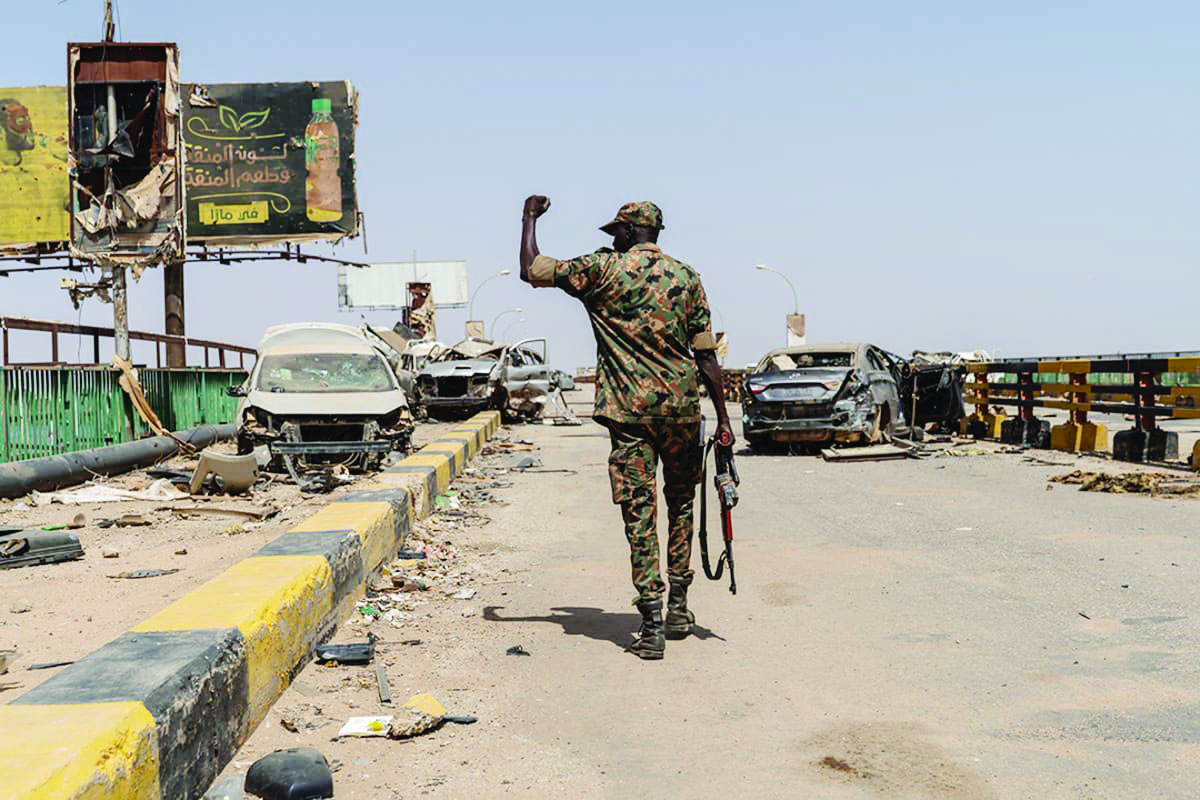
As the civil war enters its fourth year, Sudan’s two warring factions remain locked in a deadly power struggle. A year after the government-backed Sudanese Armed Forces (SAF) regained control of Khartoum from the paramilitary Rapid Support Forces (RSF), the country’s embattled western regions—including Darfur, where a UN fact-finding mission identified the “hallmarks of genocide” earlier this year—remain under RSF control. Mediation efforts have stalled as top officials in both warring camps refuse to halt their violence, and regional and international actors continue to fund and arm both belligerents.
Analysts remain unable to precisely assess the conflict’s death toll, with estimates ranging from 61,000 to hundreds of thousands. The UN continues to plead for more support as more than thirty-three million Sudanese, enduring the “world’s largest hunger crisis,” await desperately-needed humanitarian assistance.
Background
For the first half of the twentieth century, Sudan was a joint protectorate of Egypt and the United Kingdom, known as the Anglo-Egyptian Condominium. Egypt and the United Kingdom signed a treaty relinquishing sovereignty to the independent Republic of Sudan in 1956. The stark internal divide between the country’s wealthier northern region, which was majority Arab and Muslim, and its less-developed southern region, which was majority Christian or animist, sparked two civil wars, the second of which would see the country split into two states in 2011. The second Sudanese civil war from 1983 to 2005 killed an estimated two million people, with widespread documentation of famine and atrocities. In July 2011, Sudan’s southern territory seceded and formed a new state: the Republic of South Sudan.
Source: cfr.org/global-conflict-tracker