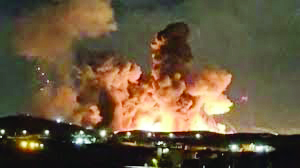
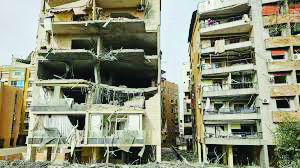




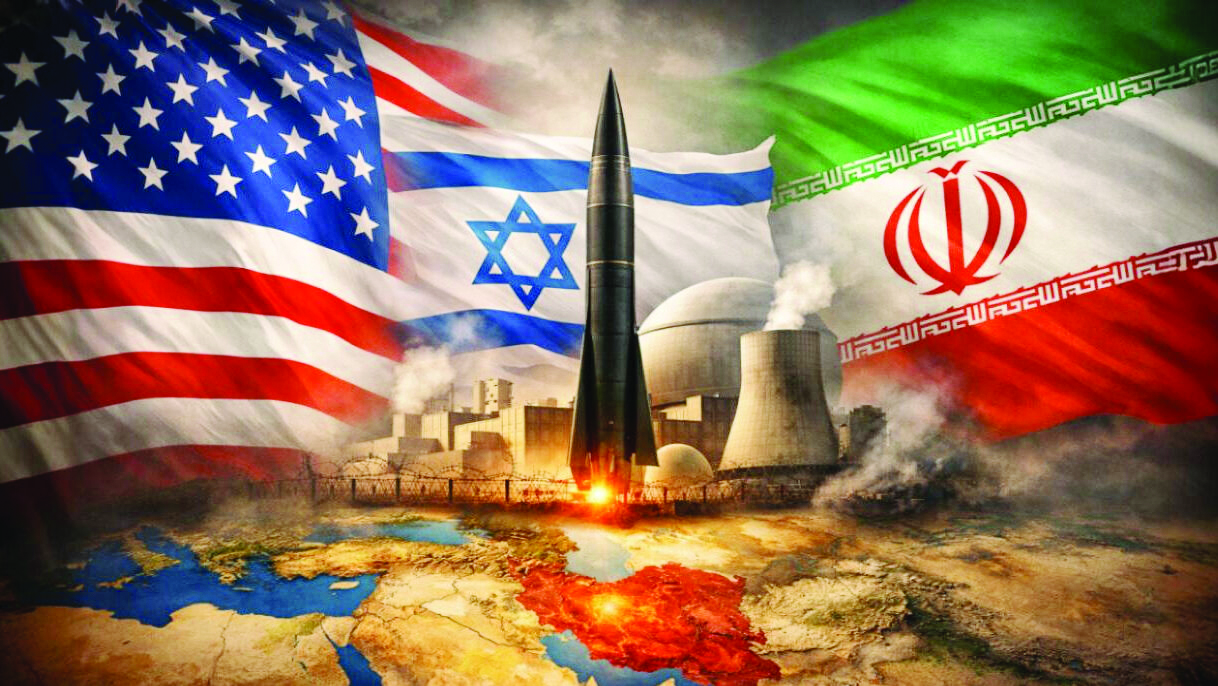






By the time you are reading this editorial, it is quite possible that the situation in the Middle East has already entered a new and extremely dangerous phase. Reports are circulating about U.S. and Israeli attacks on Iran, while key Gulf islands, ports, and oil shipping routes have become the center of global attention. The coming days will determine whether this tension remains limited or escalates into a full-scale war.
History warns us.
In the 1990s, Iraq’s invasion of Kuwait became a precursor to a major regional conflict. Saddam Hussein’s bold claims quickly collapsed due to the lack of a strong military and political strategy. This example still highlights the reality that wars are not won by emotional slogans alone, but by discipline, strategy, and unity.
Today, Iran appears in the battle field with a different strategy. The Iranian leadership has mobilized the nation on ideological grounds, and the concept of “martyrdom” has emerged as a strong motivating force. Its impact is visible on the battlefield, but at the same time, Iran is also facing significant human and economic losses.
This conflict is no longer limited to Iran and Israel.
Hezbollah in Lebanon, Houthi forces in Yemen, and other regional groups have also become involved.
If key routes such as Gulf ports or the Strait of Hormuz are targeted, the consequences will not only affect the region but also the global economy.
One of the fundamental causes of this conflict is the ongoing oppression in Gaza. Although temporary ceasefire talks are occasionally mentioned, no permanent solution has yet emerged.
The continued suffering of Palestinians has further inflamed the conflict and pushed the entire region toward instability.
In this context, a recent announcement by some Arab countries regarding a one-billion-dollar funding initiative has also surfaced, reportedly under U.S. assurances. This agreement is being
described in some circles as a “regional stability fund” or a “peace and reconstruction package,” though its practical outcomes remain unclear.
Meanwhile, the approval of a controversial law in the
Israeli parliament has further complicated matters.
According to this law, if an Israeli citizen is killed by a Palestinian, immediate capital punishment will be imposed, whereas the same law does not apply in the reverse situation.
Such laws only deepen hatred and imbalance in the region.
Pakistan’s position has also become highly sensitive.
On one hand, it has long-standing relations with Saudi Arabia and faces possible pressure; on the other hand, it shares a border with Iran and must maintain regional balance. This places Pakistan in a difficult test. If Iran targets U.S. bases in Saudi Arabia, will Pakistan stand with Saudi Arabia or adopt neutrality? This question is important not only for Pakistan but for the entire region.
If, Allah forbid, U.S. forces were to gain control over Iran and its oil resources, there is a concern that its outcome could resemble that of Cuba or other weaker states, where external pressure has limited internal sovereignty. This scenario could serve as a warning for other nations not to remain silent spectators.
The overall condition of the Muslim world is also alarming. Internal divisions, political interests, and external pressures have prevented a unified stance.
The question remains: will these countries wait for their turn, or will they adopt a collective strategy?
The global economy is also tied to this war. Arms sales, drone technology, and defense agreements are prolonging the conflict.
For some countries, this war has become a profitable
business, pushing peace efforts into the background.
In the end, the central question remains:
Is this war reaching its logical conclusion, or is it the beginning of a prolonged and devastating cycle?
History teaches us that wars are not won by weapons alone, but by wisdom, unity, and foresight. If the world fails to learn this lesson once again, the consequences could be severe—not just for the Middle East, but for the entire world.
May Allah grant victory to truth and save humanity from this destruction.
What do you think?
“Waan Laysa Lil
Insana illa ma’ sa’aa “
That man can have nothing but what he strives for.