




















By: Khalid Zaka, Surrey, BC
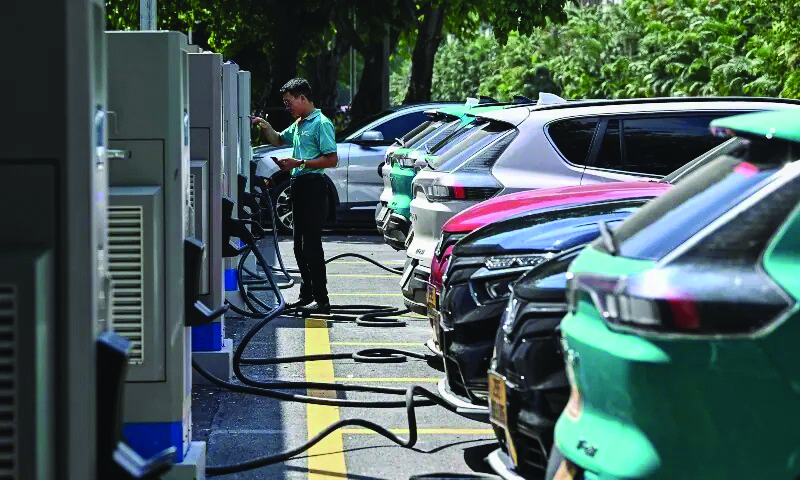
There’s a prevalent belief in advanced technology in the current era. Many advocates leveraging cutting-edge technology to develop eco-friendly solutions that mitigate greenhouse gas emissions e.g. electric cars, buses, m/cs, carbon absorption, solar power. Yet, some question whether these “green” technologies can alleviate the environmental impact, considering how technological advancements during the Industrial Revolution exacerbated greenhouse gas emissions in the first instance. It was technology that exacerbated emission because the target was productivity not environment.
The escalating levels of greenhouse gases are triggering climate change, manifesting in unprecedented natural disasters like floods and droughts worldwide. An article titled “Climate Risk Country Profile Pakistan,” prepared by Bernice Van Bronkhorst and Pretty Bhandari, highlights some of the critical numbers as listed below.
Pakistan faces rates of warming considerably above the global average with a potential rise of 1.3°C–4.9°C by the 2090s over the 1986–2005 baseline. Rises in the annual maximum and minimum temperature are projected to be stronger than the rise in average temperature, likely amplifying the pressure on human health, livelihoods, and ecosystems.
An increase in the number of people affected by flooding is projected, with a likely increase of around 5 million people exposed to extreme river floods by 2035–2044, and a potential increase of around 1 million annually exposed to coastal flooding by 2070–2100.
One can argue that five million floods affected by 2035-44 and a potential increase of one million annuity coastal flooding such long term scenarios are presented to overawe the people at present and push them to favor and adopt alternative technologies. It is important to mention that Pakistan stands nowhere in the list of countries mainly responsible for escalating levels of greenhouse gases. Instead, it is a victim, as the above quoted data depicts.
Implementing Green Revolution technology in regions like India and Pakistan yielded unintended and adverse outcomes. Although initially aimed at addressing malnutrition, the Green Revolution Technology inadvertently widened social disparities and led to ecological and societal breakdowns. Methods such as bioengineered seeds and chemical fertilizers depleted soil fertility, jeopardizing food sovereignty and security.
Similarly, the introduction of barrage-commanded irrigation technology in colonial-era Sindh offers a cautionary tale. This technology disrupted traditional irrigation practices rooted in the Indus River’s natural dynamics, leading to unforeseen consequences like waterlogging and salinity. Colonial initiatives failed to recognize the
ecological balance maintained by indigenous practices, resulting in environmental degradation.
The discourse on climate change and technology often overlooks the potential adverse effects of technological interventions. As Rob Uri (Climate Change and Technology, dated September 27, 2019) highlighted, the emergence of climate change and mass extinction weren’t anticipated consequences of industrialization. Climate change and extinctions are unintended consequences of the unchecked growth model. Moreover, while fossil fuels are commonly blamed for global warming, Jason Hickel argues that the underlying issue lies in the relentless pursuit of economic growth. This growth-driven model incentivizes the continuous innovation of technologies, exacerbating environmental degradation in the pursuit of profit.
Ultimately, the pursuit of unchecked growth perpetuates a cycle of environmental exploitation, posing a threat to the delicate balance of our planet’s ecology. It’s imperative to reconsider our reliance on growth-centric models and prioritize sustainable, equitable solutions that safeguard the environment and society.
The reported environmental and sociological impacts of the Green Revolution technology in India and Pakistan warrant that Pakistan’s government must thoroughly analyze past Green Revolution Technology before starting a new one.
Wednesday, April 29, 2026