









European countries are also not as stable and predictable as before.
Atle Hetland
There are major changes in Western politics nowadays, in substance, form and rhetoric. This is evident in Europe, but also so in the USA, where President Trump (78) in his second term in office, from January 2025-2028, has changed many things. In Germany, the federal elections last Sunday will lead to a new and more conservative time, with the conservative Christian Democratic Party, CDU, and its sister-party of CSU in Bavaria in the south, having become the largest party with about twenty-nine percent of the votes. Its leader, Friedrich Merz (69), will become the next PM, called Chancellor in Germany, in a coalition government to include the Social Democratic Party, SPD, as a junior partner, and possibly also the Green Party, Die Grüne, with eleven and a half percent of the votes. CDU-CSU and SPD have earlier also formed a ‘grand coalition’ during some of the time when Angela Merkel of CDU was Chancellor (from 2005-2021), with Olaf Scholz (66) as her deputy in her Fourth Government, and earlier as finance minister. In the last three years, Scholz has been the Chancellor, but his SPD party received just over sixteen percent of the votes in the recent elections. The right-wing party of Alternative for Germany, AfD, which received about twenty-one percent of the votes in this election, the second largest party, will not be included in the government. Several of its positions are seen as too extreme, especially on migration and its quite separatist economic and international policies, including on the EU, but it is pro-Russia and against major support to Ukraine. AfD will form the largest opposition party, under its leader Alice Weidel (46), along with the Left Party, Die Linke, with close to nine percent, on the other side of the political spectrum, and some small parties. A large proportion of the youth has voted for the Left Party, especially in Berlin; the voting age is eighteen years. In future, young people may become more left-oriented than right-oriented.
It is a fact that Germany stands ahead of a number of major structural changes, especially in the economic and industrial fields. Its advanced, high quality industry needs to become more competitive, indeed as for car manufacturing and in other fields. Germany lags behind as for IT and digitalisation, and must modernise fast. Since Germany before 2022 had established close ties with Russia for its supplies of oil and gas, it suffered a lot after Russia’s invasion of Ukraine and the EU’s sanctions against Russia leading to huge increases in energy costs for Germany. Earlier, Germany had atomic energy plants, but has now faced out those, yet, importing much energy from France, made in atomic energy plants, but also fossil fuel from Norway. In future, Germany must move towards more production of its own renewable energy. The new CDU-CSU Chancellor will indeed face major challenges in his term in office, until the next elections in four years, or possibly earlier if the government will not last the full term. The turnout in this year’s elections was very high, eighty-four percent.
Other European countries are also not as stable and predictable as before. In France, President Emmanuel Macron (47) is in his second term lasting from 2022-2027. He is considered a centrist, well, often quite conservative and pragmatic although originally coming from the socialist side on the right-left scale in politics. The right-wing National Rally Party (earlier called the National Front) is the largest opposition party in France and received about a third of the votes in the last elections held in 2024. In Italy, Giorgia Meloni (48) of the right-wing party, Brothers of Italy, became the first woman PM in the country in 2022. Also in the Netherlands, Sweden, and other European countries, right-wing, populist parties have sizeable support, all of them opposing high immigration as one key characteristic. In Sweden, the Sweden Democrats Party is not a member of the current Conservative government led by PM Ulf Kristersson (61) but a supporter of the government, and it received about twenty percent of the votes in the last elections. Next elections will be held in 2026, and the SD leader Jimmie Åkesson (45) insists that SD must then be a full partner of the government if the right side wins the elections.
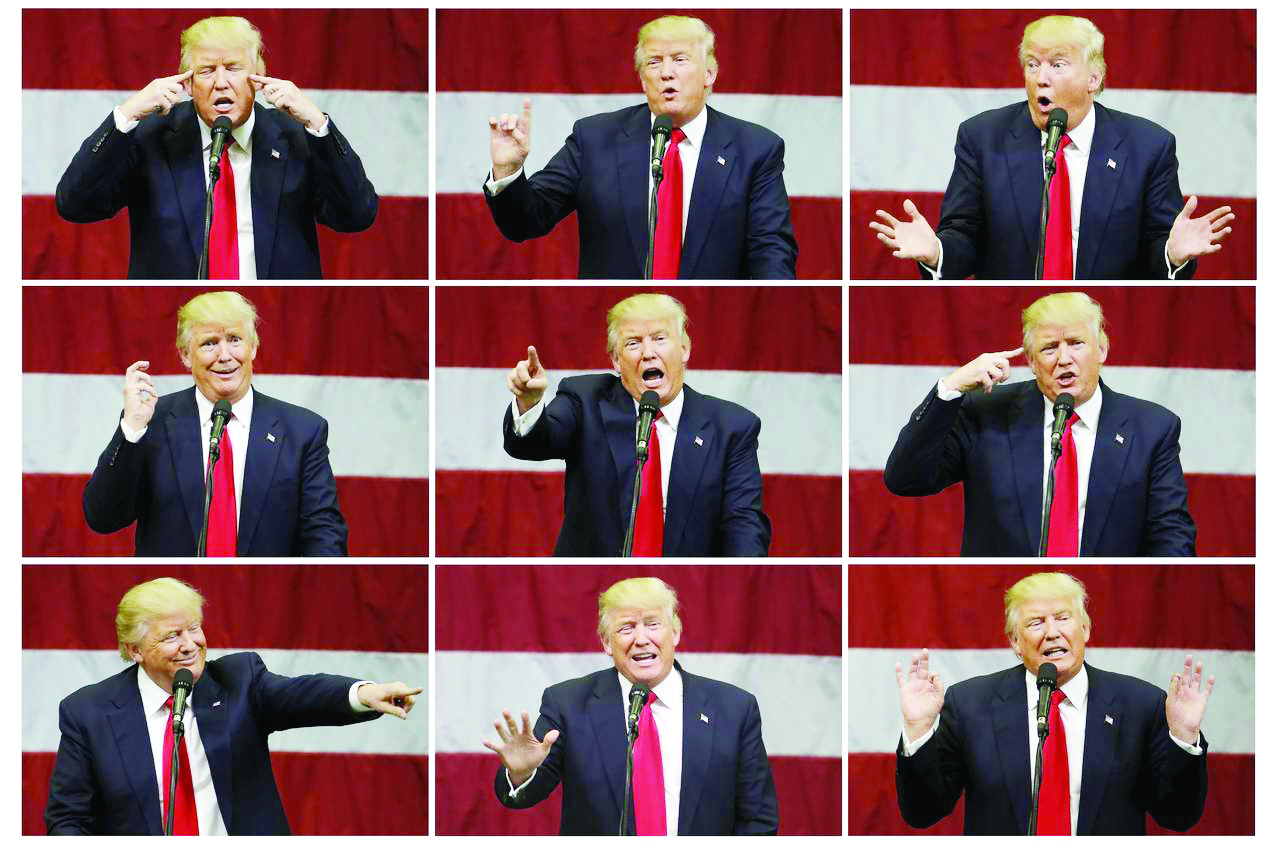
And then to the USA, President Trump, populism and unpredictable initiatives; first, it is easy to criticise Trump simply because so much of what he says is formulated in blunt language, often with exaggerations and inaccuracies. We have to deduct a lot from his words and the ways he formulates his points, and from there, we can try to interpret and understand his messages as positively as possible even if we in ordinary, polite conversation wouldn’t have done that – after all, he is the most powerful man in the world, and it is true that many things in countries and institutions can be done differently, in a world where much in social-democratic and establishment politics has stagnated.
In many ways, Trump’s suggestions and new policies may lead to paradigm shifts or watershed changes in the ways countries and institutions do many things. For example, the West’s ways of having built up detailed and costly bureaucracies, sometimes to such an extent so that things have become illogical and counterproductive. However, that doesn’t mean that Trump’s ways of attacking issues necessarily are right. Rather the opposite and some of Trump’s ideas may be a danger to democratic and fair ways of doing things. Yet, everyone must find ways of relating to him and his administration, indeed the European leaders, dealing with him on serious issues, such as trade, security and other things. It is up to all of us to see what good can come out of Trump’s ideas – and we should also come up with own innovative ideas and challenge what Trump says.
Source: nation.com.pk/
Wednesday, April 29, 2026