















By Benjamin Hart,
After four days of deadly fighting between India and Pakistan that seemed near the edge of catastrophe, the two sides abruptly agreed to a U.S.-brokered cease-fire on Saturday. The conflict began with an April terrorist attack by Pakistani militants in the long-disputed region of Kashmir, during which gunmen shot and killed 26 people at a popular vacation spot in the Indian-administered part of the region. India accused Pakistan’s government of being behind the attack, a charge Pakistan denied.
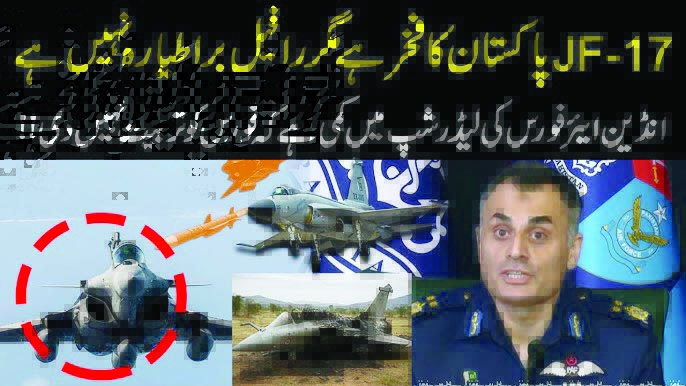
Last week, India hit Pakistan with air strikes deep into the country, killing dozens, but Pakistan claimed to have shot down multiple Indian planes. (The details of that claim remain murky.) India accused Pakistan of a drone attack near the Kashmiri line of control, which Pakistan denied; India responded by targeting Pakistan’s air-defense systems. It was the latest chapter of hostilities between the nuclear-armed countries, which have simmered since partition in 1947 and flared up many times since, including a devastating 1971 war (which led to the creation of Bangladesh) and several skirmishes, most recently in 2019. For some insight on how India and Pakistan got to this point, the fragility of the current cease-fire, and the American role in all of it, I spoke with Manjari Chatterjee Miller, who is a senior fellow for India, Pakistan, and South Asia at the Council on Foreign Relations and a professor of international relations at the University of Toronto.
India and Pakistan could both spin the results of this conflict quite positively. India hit the supposed terrorist sites in Pakistan and some of the country’s defense systems, and Pakistan shot down at least two planes and infiltrated Indian airspace with drones. Do you think both sides came out with enough to claim some kind of victory and mollify things for a while?
I would not call the last four days an unmitigated win for India. On the one hand, we have now seen the extent to which India is determined to act in its self-defense; clearly, India is no longer hesitant about escalation. In the past, we had talked about how the threat of nuclear escalation, particularly low-yield weapons, was a reason to hold back. We see that India is very willing to engage in conventional warfare to defend its interests and to protect its territory. But in terms of the actual success of the strike — sure, they hit sites in Pakistan, but India also lost fighters. They can’t say, “We obliterated Pakistan’s air defenses and took out their fighter jets and hit all of the terrorist sites, and we did it without taking too much damage or casualties on our side.”
But the part that I think is really not a win for India, and really also not a win for India–United States relations, is the U.S. mediation. Kashmir is India’s sovereign issue, and it has never accepted third-party intervention or interference in Kashmir. And then you have President Trump saying he’s happy to find a “solution” to Kashmir.
Two or three decades ago, when the U.S. relationship with India was not so good, one of the reasons is that we kept talking about India-Pakistan, India-Pakistan. That hyphenation was something the Indian government absolutely hated. In the last ten to 15 years, the India–United States strategic partnership has completely transformed the relationship. POh, that pesky conflict with Pakistan. These regional powers are just squabbling. That kind of narrative shifted for India.
India is actually denying that the U.S. mediated this cease-fire.
Yeah, whereas Pakistan has gone out on a limb and thanked the United States. And here’s what’s interesting: It also thanked Saudi Arabia, the UAE, and Qatar, in addition to China and Turkey. With China and Turkey, you can say, “Okay, they supplied drones and supplied fighter jets, air-defense systems.” So you can understand that. But why the UAE, Qatar, and Saudi Arabia? I wonder to what extent those countries rushed to the U.S. as well and pressured the Trump administration to do something…
.Source: nymag.com/intelligencer