


















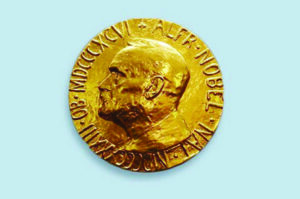
The Nobel Peace Prize and the other Nobel Prizes were established by the Swedish inventor and businessman Alfred Nobel through his last will. When the Swedish businessman Alfred Nobel passed away in 1896, he left behind what was then one of the world’s largest private fortunes. In his last will Nobel declared that the whole of his remaining fortune of 31.5 million Swedish crowns was to be invested in safe securities and should constitute a fund “the interest on which shall be annually distributed in the form of prizes to those who, during the preceding year, shall have conferred the greatest benefit on mankind”
Will: The will specified in which fields the prizes should be awarded – physics, chemistry, medicine or physiology, literature and peace – and which criteria the respective prize committees should apply when choosing their prize recipients. According to the will the Nobel Peace Prize was to be awarded “to the person who shall have done the most or the best work for fraternity between the nations and the abolition or reduction of standing armies and the formation and spreading of peace congresses.”
Sources: nobelpeaceprize.org/nobel-peace-prize
First awarded in 1901, its focus has evolved from early peace movement pioneers to include interwar diplomats and, since WWII, efforts in arms control, peace negotiation, human rights, and democracy. The prize is presented annually on December 10th and can be awarded to individuals or organizations.
Key aspects of the award’s history
First Award: The first Nobel Peace Prize was awarded in 1901 to two individuals, Frédéric Passy and Henry Dunant, who shared the prize.
Evolving Focus: The types of work recognized have changed over time.
Early years (pre-WWI): Awarded to leaders of the organized peace movement.
Interwar years: Shifted to politicians promoting peace through diplomacy and international agreements, as well as humanitarian efforts.
Post-WWII: Principally awarded for work in arms control, peace negotiations, democracy and human rights, and creating a more peaceful world.
Notable facts: The International Committee of the Red Cross has received the prize three times (1917, 1944, and 1963).
Bertha von Suttner was the first woman to receive the prize in 1905.
Malala Yousafzai is the youngest laureate, receiving the award in 2014 at age 17.
Linus Pauling is the only person to have won two unshared Nobel Prizes, receiving one for Chemistry and one for Peace.
Presentation: Unlike the other prizes, the Peace Prize is presented annually in Oslo, Norway, on December 10th, the anniversary of Nobel’s death. Sources: AI