













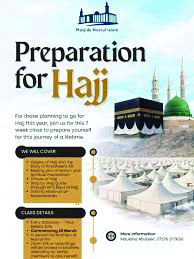
To prepare for the journey of Hajj 1447H (2026), you should focus on four key areas: spiritual readiness, administrative requirements, physical fitness, and logistics. According to the estimated lunar calendar, Hajj 1447H is expected to take place between May 25 and May 30, 2026. 1. Spiritual & Educational Preparation
Set Sincere Intention (Niyyah): Start by making a sincere intention to perform Hajj solely for Allah’s pleasure.
Learn the Rituals: Study the three types of Hajj (Tamattu, Qiran, and Ifrad) and the specific rites (Manasik), such as entering Ihram, Tawaf, and the standing at Arafah.
Seek Forgiveness: Reconcile with others, clear any outstanding debts, and engage in daily dhikr and istighfar to prepare your heart. Set Sincere Intention (Niyyah): Start by making a sincere intention to perform Hajj solely for Allah’s pleasure.
Learn the Rituals: Study the three types of Hajj (Tamattu, Qiran, and Ifrad) and the specific rites (Manasik), such as entering Ihram, Tawaf, and the standing at Arafah.
Seek Forgiveness: Reconcile with others, clear any outstanding debts, and engage in daily dhikr and istighfar to prepare your heart.
2. Administrative & Financial Steps
Official Registration: Monitor your national Hajj mission or the Nusuk Hajj Portal for registration dates.
Passport Validity: Ensure your international passport is machine-readable and valid for at least six months beyond your departure date.
Financial Planning: Start saving immediately. Be prepared for potentially higher costs; for example, some 2026 packages are estimated at approximately $19,000 USD (excluding airfare) due to rising service fees.
Time Off: Coordinate with your employer for at least two weeks to a month of leave around the estimated Hajj dates.
3. Medical Requirements
Health Certificate: A new mandatory requirement for Hajj 1447H is a Medical Health Certificate confirming you are free from chronic conditions and physically capable of performing rituals.
Disqualifying Conditions: Severe organ failure, advanced dementia, active communicable diseases (like TB), or high-risk pregnancies may disqualify applicants.
Vaccinations: You must obtain required vaccinations, typically including meningococcal, seasonal influenza, and potentially COVID-19, as directed by the Saudi Ministry of Health.
4. Physical & Practical Preparation
Build Stamina: Hajj is physically demanding. Start a walking regimen of at least 30 minutes daily, gradually building up to longer distances, as you may walk up to 25 km on peak days.
Footwear: Invest in comfortable, flat trekking sandals early and wear them frequently to “break them in” before your trip.
Essential Packing: Prepare a kit including unscented toiletries, travel-sized prayer mat, electrolytes for hydration, and a waist belt with zipper pockets for money and ID.
Source: AI can make mistakes, so double-check with your Hajj traveler agent and religious Scholars