













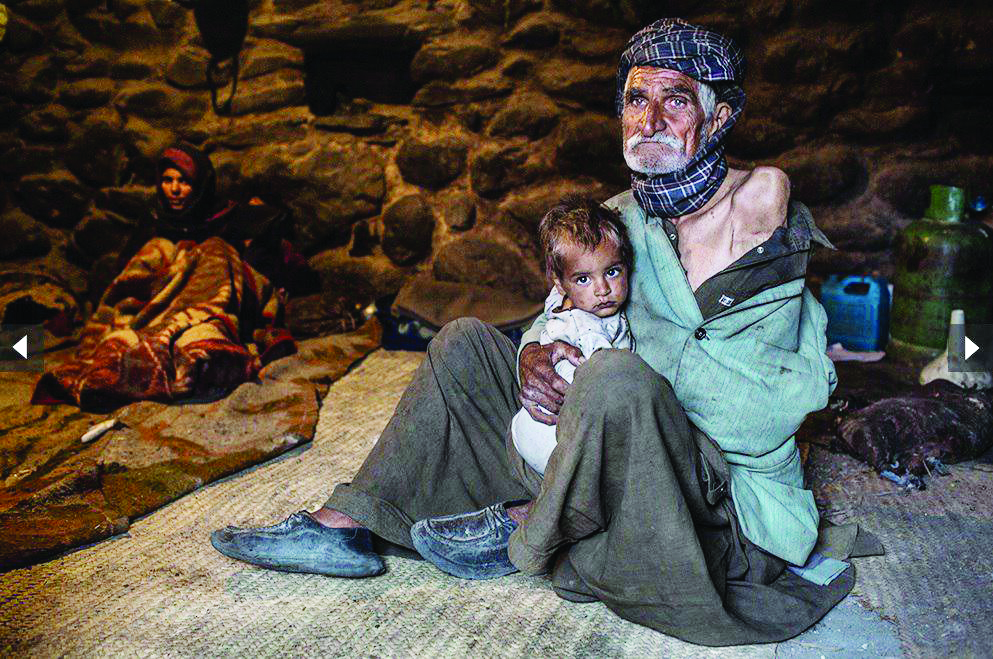



Experts warn that the water crisis in the country’s south will worsen, unless there is urgent government action.
Iraq is experiencing its driest year on record since 1933, as the Tigris and Euphrates Rivers, which flow into the Persian Gulf from West Asia, have seen their levels drop by up to 27 percent due to poor rainfall and upstream water restrictions.
In the southern part of the country, a humanitarian crisis caused by drought and water shortages is unfolding in Basra, a vital port and oil hub.
Basra, home to nearly 3.5 million people, remains Iraq’s most water-scarce and climate-vulnerable region, deeply affected by inadequate water management.
Many there are forced to depend on daily water deliveries to ensure their survival and health. Hasan Raykan, a resident of Basra, is forced to travel several kilometres daily just to secure his share of clean water. He says the allocated amount barely covers his family’s needs. “I have to wake up early and leave my work and stand in long queues to bring [water] home,” Raykan told Al Jazeera.
“In many cases, we have to tighten ratios between livestock and household use. The seawater near our homes is polluted and causes skin diseases.” The quality of seawater, already unsuitable for human consumption, has been further degraded by oil spills, agricultural runoff and sewage discharge.
Furthermore, saltwater travelling from the Gulf – via the Shatt Al-Arab River, which feeds from the Tigris and Euphrates – has been moving steadily upriver, increasing salinity levels in the Basra region. And the flow of freshwater is diminishing due to dams upstream.
The Mihayla desalination station in Abul Khaseeb district has been operating to alleviate Basra’s water crisis for more than a year.
It uses a special method to treat water containing high quantities of salt from the Shatt Al-Arab River. “We produce nearly 72,000 cubic metres [19 million gallons] of treated water daily, currently serving about 50 percent of Abul Khaseeb district,” Sa’dun Abbud, senior engineer at the Mihayla Water Desalination Station, told Al Jazeera.
“Salinity in the Shatt Al-Arab River has reached nearly 40,000 total dissolved solids. After desalination, the refuse is returned to the river.” Experts warn that the water crisis will worsen, unless there is urgent government action… Source: aljazeera.com/news
Friday, May 8, 2026