

















Who receives Zakat?
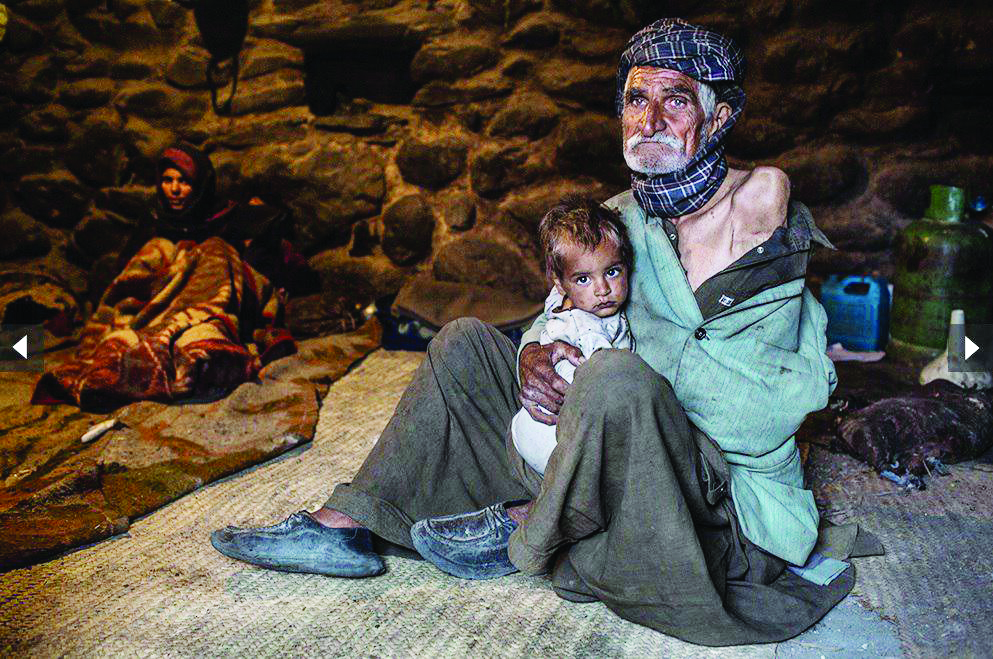
The Qur’an (9:60) specifies eight categories for the distribution of Zakat:
1. The poor, 2. The needy 3. Those employed to administer Zakat 4. Those whose hearts are to be reconciled. 5. Those in slavery
6. Those in debt. 7. In the way of Allah 8. The destitute traveller
The poor and needy are defined as those whose Zakatable assets are valued below the Nisab level and whose surplus
non-Zakatable assets are also valued below the Nisab level. Surplus assets are defined as any non-Zakatable assets that
are never used.
Someone whose surplus assets are valued above the Nisab level, and who also has Zakatable assets valued below
the Nisab level does not pay or receive Zakat.
WHAT IS ZAKAT?
Zakat is a compulsory act of worship that requires Muslims who own wealth at or over a certain threshold (called the
Nisab) to donate a portion of that wealth, typically 2.5%, to those who are eligible. Itis a right the poor have over the rich.
The Nisab was set by the Prophet Muhammad (peace be upon him) at a rate
equivalent to: 87.48 grams of gold 612.36 grams of silver (Check current Gold and Silver prices)
See “How do I calculate my Zakat?” to know which Nisab to use for your Zakat calculation. Linguistically, Zakat is associated with purification and growth. The importance of this pillar is such that in the Qur’an it is mentioned 28 times alongside the observation of Salah, the obligatory prayer.
When should Zakat be distributed? Zakat should be paid as soon as possible. At the very latest, Zakat should be distributed one year after the due date as it is a sin to delay disbursement without a valid reason.
Where should Zakat be distributed? It is preferred to give Zakat locally if deserving recipients exist. At this time, situations of ex-treme poverty and disaster relief around the world also deserve the community’s support. It is hoped that a suitable balance be-tween local and international contribution will be achieved, God willing.
WHO PAYS ZAKAT?
Those required to pay Zakat must be:
• Adult (have reached puberty) • Muslim (Zakat is not paid by non-Muslims)
• Sane • Has complete ownership of the nisab
Please note, the three schools of thought other than the Hanafi school state that Zakat should be paid on qualifying wealth
owned by the insane and children. Islam encourages Muslims to seek halal employment and take part in entrepreneurial activity, but in order for commerce to benefit society, Islam places several obligations on those involved in
wealth creation. Amongst these is the obligation of Zakat, the third of five pillars of Islam.
Scholars state that the giving of Zakat has both an outer and an inner dimension.
The inner dimension suppresses the ego, helping Muslims to overcome tendencies such as selfishness and miserliness.
The outer dimension involves the purification of a Muslim’s wealth.
WHEN & WHERE?When is Zakat paid?
Your Zakat year starts on the date your wealth first equaled or exceeded the Nisab. Zakat should then be calculated and paid after one lunar year has passed and every year thereafter on that date. If you cannot remember the date you first became owner of the Nisab, then the date should be estimated. If this is not possible, then a random date should be selected and adhered to. Pay-ing Zakat in Ramadhan is not necessary, although giving charity in this month guarantees greater rewards.
WHAT IS ZAKAT AL FITR?
Zakat al Fitr (or Sadaqat al Fitr) is a duty that is paid on the occasion of Eid al Fitr and is required of every Muslim, whether
male or female, minor or adult, as long as he/she has the means to pay. The head of the household may pay the required
amount for the other members. Consult your local mosque for the recommended amount to pay per head. Our calculator below will allow you to easily work out your Zakat payment
HOW DO I CALCULATE MY ZAKAT?
1. Cash and liquid investments
• Cash and liquid investments are fully subject to Zakat.
• You should include cash in all your bank accounts, in your wallet and under your mattress!
• If interest has been earned on your liquid investments, then it should be given to charity and only the principal amount should be noted for Zakat purposes.
2. Gold and silver
• Gold and silver, in whichever form (jewellery, coin, ingots etc.) are subject to Zakat.
The Hanafi school treats all gold and silver jewellery as Zakatable, regardless of
whether it is worn or stored.
• If you own personal use items made from a mixture of metals, these are only liable
to Zakat if half or more of the metal is gold or silver, although some scholars hold
that the proportion of gold or silver in any owned asset is Zakatable.
• You can find out the current value of your gold by consulting your local jeweller.
3. Shares, unit trusts & equity investments
• If shares are purchased with the express intention for resale then the entire holding is subject to Zakat.
• If, however, shares are purchased as an investment to generate dividends, then as Zakat is only due on the Zakatable assets of the firm, a realistic attempt must
be made to calculate the percentage of the share holding relating to Zakat able assets.
• Any dividends received should be added to one’s cash balance for Zakat purposes.
4. Property and other fixed assets
• The house in which you live is not subject to Zakat.
• If a property or other fixed asset has been purchased with the express intent to resell, then the entire value of the proper-ty/asset is subject to Zakat.
• If there is any other intention, then it is not subject to Zakat.
• Any rental income from properties owned should be added to one’s cash balance for Zakat purposes.
5. Pension
• Zakat is payable in full on pensions received after retirement.
• For monies set aside for pensions prior to retirement, Zakat is only payable if
the pension assets are being invested on behalf of the pension holder. If no such
investment is being made, then Zakat is not payable. Please note, if pension
monies are able to be invested, care should be taken to invest in a shari’ah
complaint investment, and the Zakat liability will be determined by the nature of
the investment (property or shares etc. as per points 3 and 4 above).
6. Debts owed to you
• Zakat is payable on strong debts, i.e. money that is owed to you that you are confident will be paid.
• This may include personal loans to friends and family.
• This does not include outstanding wages, dowry, inheritance or assets held in
trust (other than assets held under a Bare Trust). My total cash amount is the value of my liquid assets minus interest is the value of all the gold in my possession is the value of all the silver in my possession is the total value of my shares, unit trusts and equity investments is the total value of my Zakatable property and other fixed assets is
The total value of the Zakatable portion of my pension is the total amount of money I have lent to others that I am confident will be repaid is $……….
7. Business liabilities
The total value of rent, bills and salaries
outstanding or overdue is the total value of outstanding short-term commercial loans is the next year’s non-interest portion of long term business debt is the total value of goods purchased on credit.
My total Zakatable assets are
8. Business assets
• Business assets are subject to Zakat.
• These include cash, finished goods, work in progress, raw materials and strong debts, i.e. money owed to the business that is likely to be received.
• All business assets should be valued at their current market price. For finished
goods, this should, therefore, be their retail sale price. For unfinished goods, this
should be whatever price you expect the unfinished good to fetch on your Zakat anniversary date.
Remember you only pay Zakat if your net assets equal or exceed the Nisab threshold.
If you only have gold as an asset, then the Nisab measure for gold must be used. If,however, you have a mixture of assets, then the Nisab level for silver should be used.
Although some scholars still maintain that gold should be used regardless, using silver
is safer for the payer and more beneficial for the recipients of Zakat. Remember that the Nisab is either 87.48 grams of gold or 612.36 grams of silver. To find out the current monetary equivalent of the Nisab limit, it is necessary to establish the market rate for a gram of gold and silver….
Zakat Due Additional notes
It is quite possible that your wealth may fluctuate above and below the level of Nisab during the year. If this is the case then Zakat is only due if wealth is in excess of the Nisab on your Zakat anniversary. Zakat is always paid on the assets owned on the Zakatable date, not on fluctuating amounts during the year or even an average amount. It is permissible to prepay Zakat for future years. However, at the time of payment, the intention must clearly be for future years.
In addition, a Zakat calculation should still be made on the Zakat anniversary to make sure that suffi-cient Zakat has been paid. Missed Zakat payments for previous years must be paid as a matter of urgency. A realistic attempt must be made to calculate the Zakat due for each of the years missed. Last but not least, don’t forget to intend specifically the giving of Zakat when you make your payment!
9. Personal liabilities
• Certain liabilities can be deducted from your Zakatable assets before calculating
how much Zakat you owe.
• These include outstanding or overdue living expenses such as a rent payment or utility bill, as well as debts……….
If your net assets exceed or equal the Nisab then Zakat is due on 2.5% of total net assets
Short term is less than 12 lunar months, and long term is more than 12 lunar months
Wednesday, May 6, 2026