

















By Sqn. Ldr. Nusrat Hussain (Retd)
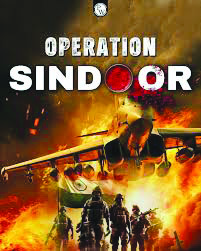
Vancouver, Canada.  India launched Operation Sindoor to project military might and political resolve. Instead, it revealed a widening gap between rhetoric and reality — exposing cracks in India’s defense credibility and diplomatic standing.
1. The Myth of a “Paused” Victory: New Delhi’s declaration that Operation Sindoor was “put on hold” is perhaps the clearest sign of failure. A victorious army consolidates gains — it does not suspend them. Prime Minister Narendra Modi’s emotional statement that he was “hurt” and would avenge the setback through Sindoor 2 confirms that Sindoor 1 fell short of its objectives. A government confident of victory does not prepare a sequel; it declares closure.
2. Unverified Claims and Shrinking Credibility: Months after the operation, the Indian Air Chief claimed that twelve Pakistani aircraft had been downed. No photographic proof, radar logs, or international verification ever surfaced. Such belated assertions, made without evidence, have eroded confidence in India’s military transparency. The conflicting statements of India’s Air Force, Army Chief, and Defense Minister have further undermined strategic coherence and revealed how politicized messaging has replaced professional assessment.
3. Diplomatic Erosion: Before Sindoor, India was viewed as a mature democracy balancing assertiveness with restraint. After Sindoor, it appears louder but less credible — a country driven by nationalism more than strategy. Threats to “erase Pakistan from the map” may electrify crowds but alienate foreign partners. Diplomacy rewards composure and consistency, not theatrical bravado. By substituting both with inflated claims, India has diminished its soft power — once its strongest asset in South Asia.
4. Militarization of Politics: Equally alarming is the politicization of India’s armed forces. Senior officers have become participants in public rhetoric, blurring the line between military professionalism and political propaganda. When generals echo campaign themes, discipline gives way to populism. This drift threatens India’s democratic fabric and risks transforming it into a soft-authoritarian system where patriotism substitutes for accountability.
5. Domestic Politics behind the War Talk: Operation Sindoor’s rhetoric aligns neatly with the upcoming Bihar elections in November 2025. Facing economic stagnation and rising discontent, the ruling BJP has turned to nationalist theatre to rally voters. Talk of Sindoor 2 and “avenging the hurt” serves the campaign trail, not the command table. But politicizing warfare is dangerous. Once a leadership begins to exploit military action for domestic applause, it traps itself in a cycle where escalation becomes a political necessity.
6. The Pakistan–Saudi Strategic Mutual Defence Agreement (SMDA): While India wrestles with internal contradictions, Pakistan’s regional influence has grown through the Pakistan–Saudi Strategic Mutual Defence Agreement (SMDA) — a pact that treats an attack on one as an attack on both. The SMDA represents a new strategic deterrent that reshapes the South Asian balance. It would be intellectual dishonesty if the names of Field Marshal Asim Munir and Prime Minister Shahbaz Sharif were not mentioned in this context. Their diplomacy and engagement have repositioned Islamabad as a pivotal security partner for key Muslim states. This emerging Islamabad–Riyadh axis adds a stabilizing dimension to the region and compels New Delhi to temper its rhetoric. The pact also reflects a larger realignment — one where Muslim-majority nations coordinate defense and intelligence cooperation independently of Western frameworks. In doing so, Pakistan has gained strategic depth and moral leverage that India cannot ignore.
7. Why India Will Avoid another Conflict: Despite its fiery tone, India is unlikely to initiate another confrontation. Three realities restrain it: nuclear equivalence, international pressure, and Pakistan’s expanding alliances. Modi’s threats of Sindoor 2 are largely political theatre, aimed at energizing voters rather than commanding forces. Even within Indian policy circles, analysts concede that renewed conflict could backfire militarily and diplomatically.
8. From Projection to Credibility Deficit: Operation Sindoor was conceived as a demonstration of strength but ended as a study in strategic overreach. By halting operations midway, issuing contradictory statements, and politicizing its armed forces, India has eroded its claim to regional leadership. True power is quiet and disciplined, not loud and uncertain. Until India replaces posturing with professionalism and rhetoric with results, it will remain a nation strong in words but weak in credibility. Sindoor 1, far from a victory, marks the turning point when performance gave way to pretension.
“Real strength lies not in declaring victory, but in earning credibility.”
Disclaimer: The views expressed are solely those of the author, based on open-source information and personal analysis. They do not represent the position of any government or institution.