









1947: June 3: British Government decides to separate British India, into two sovereign Dominions of India and Pakistan.
14 August: Pakistan came into existence. October 27: Indian Air troops land in Kashmir as the Maharajah declares accession of Kashmir to India.
1948: September 11: Founding father of nation Quaid-e-Azam dies in Karachi due to a stroke.
September 14: Khwaja Nazimuddin becomes Governor-General of Pakistan.
1949:March 12:Objectives Resolution passed by Liaquat Ali Khan
1950: April 8: Liaquat-Nehru pact is signed in New Delhi on measures to deal with major Inter-Dominion problems.
May 18: Peshawar University comes into being.
September 6: General Mohammad Ayub Khan, the first Pakistani, is appointed Commander-in-Chief of the Pakistan Army.
1951: October 16: Prime Minister Liaquat Ali Khan is assassinated at Rawalpindi.
October 17: Malik Ghulam Muhammad becomes Governor-General, Khwaja Nazimuddin assumes charge of Prime Minister.
1952: August 21: Pakistan and India agree on the boundary pact between East Bengal and West Bengal.
January 12: PPL discovered a huge natural gas field at Sui in Bugti tribal area. The seventh largest gas field in the world and the biggest in Pakistan at that time.
1953: April 17: Muhammad Ali Bogra is sworn is as Prime Minister.
1954: April: Urdu was made the National language
August 7: The government of Pakistan approves the National Anthem, written by Abu Al-Asar Hafeez Jalandhari and composed by Ahmed G. Chagla.
1955: January 1: Pakistan International Airlines comes into being.
January 17: Short story writer, Saadat Hasan Manto dies in Lahore.
October 6: Governor-General Ghulam Mohammad’s resignation is succeeded by Iskander Mirza.
1956: February 21: Constituent Assembly decides the country shall be the Federal Republic known as the Islamic Republic of Pakistan.
March 23: 1956 Constitution is promulgated on Pakistan Day. Major-General Iskander Mirza has been sworn in as the first President of Pakistan.
1957: July 11: Spiritual leader of Shia Imami Ismaili Muslims and one of the founders of Muslim League and first president of All India Muslim League, Aga Khan, dies.
Dec16: Malik Firoz Khan Noon is sworn in as the seventh Prime Minister of Pakistan.
1958: February 14: Sardar Abdul Rab Nishtar, veteran leader of the Pakistan Movement dies in Karachi.
July 17: First Nigar Film Awards held.
October 7: Martial Law is declared throughout the country. General Ayub Khan becomes Chief Martial Law Administrator.
October 27: Ayub forces Iskander Mirza to step down, and General Ayub Khan himself becomes President
1959: July 12: Shukriya Niaz Ali becomes the first woman pilot in Pakistan.
October 27: President General Ayub Khan becomes Field Marshal.
1960: February 24: Presidential Cabinet decides to name the new Capital as Islamabad.
March 23: Foundation of Minar-e-Pakistan is laid.
July 31: Foundation stone of Mazar-i-Quaid (Mausoleum of M.A. Jinnah) is laid.
September 9: Pakistan achieved its first Gold Medal in the 1960 Olympics, defeating India in hockey by 1–0 in Rome.
1961: January 1: Decimal coinage was introduced in Pakistan.
April 22: Govt. institutes Film Awards.
July 15: Jasmine is chosen as the national flower of Pakistan.
1961: January 1: Decimal coinage was introduced in Pakistan.
April 22: Govt. institutes Film Awards.
July 15: Jasmine is chosen as the national flower of Pakistan.
1962: On June 8: 1962 Constitution is promulgated.
June 1: the Soviet Union awards Lenin Prize to Faiz Ahmed Faiz for his literary contribution.
June 7: SUPARCO launches Pakistan’s first weather rocket, Rehbar-I from Sonmiani.
1963: January 5: First trade agreement is signed between Pakistan and China.
January 24: Zulfiqar Ali Bhutto becomes Foreign Minister.
March 2: Pakistan and China sign a border agreement in Peking (Beijing).
1964: On June 8: 1962 Constitution is promulgated.
June 1: the Soviet Union awards Lenin Prize to Faiz Ahmed Faiz for his literary contribution.
June 7: SUPARCO launches Pakistan’s first weather rocket, Rehbar-I from Sonmiani.
September 17: Fatima Jinnah filed her paper as a candidate for the Presidential election.
October 28: Pakistan’s hockey team wins a silver medal in Tokyo Olympic Games.
November 26: President Ayub Khan inaugurates Pakistan Television Lahore Station.
1965: March 21: National Assembly elections held. Out of 150, Pakistan Muslim League wins 120 seats.
September 6: Second war between India and Pakistan over Kashmir begins.
1966: On January 10: Tashkent Declaration was signed between India and Pakistan.
November 13: Punjab city of Montgomery renamed Sahiwal.
1967: July 9: Mohtarma Fatima Jinnah dies in Karachi.
August 24: Pakistan’s first steel mill is inaugurated at Chittagong.
November 18: Pakistan awards Sitara-i-Imtiaz to Egyptian vocalist Umm-i-Kulsoom for singing the poetry of Allama Iqbal.
December 1: Pakistan People’s Party comes into being.
1968: September 25: Pakistan Television Dhaka Station is inaugurated.
October 26: Pakistan becomes Olympic hockey champion, winning over Australia 2–1.
November 7: Students’ demonstrations start throughout the country that later led to the resignation of General Ayub Khan.
1969: March 25: East Pakistan uprising forces Ayub Khan to resign and hand over power to Army Chief General Yahya Khan. Martial law is proclaimed and assemblies are dissolved.
1971:
January 30: An Indian Airlines airplane, hijacked by two Kashmiri separatists, lands at Lahore airport.
February 16: Karakoram Highway, linking China and Pakistan, opened.
August 29: Rashid Minhas awarded Nishan-i-Haider, Pakistan’s highest gallantry award.
October 24: Pakistan wins World Hockey Cup defeating Spain 1–0 at Barcelona.
November 22: India launches a full-scale attack on East Pakistan.
December 16: Dhaka falls and Bangladesh comes into being.
December 20: General Yahya Khan hands over power to Z. A. Bhutto, who takes over as President and Chief Martial Law Administrator.
1972:
January 20: Zulfikar Ali Bhutto called a secret meeting at Multan, and launches the program on nuclear weapons development.
April 14: First session of National Assembly. Bhutto was elected President.
May 1: Labor Day is celebrated for the first time in Pakistan.
July 2: Simla Agreement is signed between President Bhutto and Prime Minister Indira Gandhi.
October 28: President Bhutto inaugurates Karachi Nuclear Power Plant (KANUPP).
1973: February 13: Begum Rana Liaquat Ali becomes the first woman to assume the office of Sindh Governor.
August 11: Chaudhry Fazal Ilahi is elected as President.
August 14: Constitution of Pakistan 1973 promulgated
August 28: Return of Pakistan POWs (prisoners of war) accord signed in New Delhi.
December 30: Z. A. Bhutto lays the foundation stone of Pakistan Steel Mills.
1974: July 27: Council of Islamic Ideology recommends abolishing Riba and introducing Zakat.
October 5: Pakistan and Bangladesh agree to establish diplomatic ties.
1976: March 1: General Muhammad Zia-ul-Haq becomes Chief of Army Staff.
April 8: Sardari system is abolished in Balochistan.
July 24: Lahore-Amritsar train service, Samjhota Express starts.
August 6: Z. A. Bhutto lays the foundation stone of Port Qasim.
1977: July 5: General Zia-ul-Haq enforces Martial Law. Constitution suspended; political activities banned.
September 17: Z. A. Bhutto was arrested under Martial Law orders.
1978: March 18: Lahore High Court awards death sentence to Bhutto along with four others.
June 11: Altaf Hussain forms All Pakistan Muhajir Students Organization (APMSO).
September 16: General Zia-ul-Haq is sworn in as President.
1979: Hudood Ordinance enacted
April 4: Z. A. Bhutto was hanged in Rawalpindi jail.
October 15: Dr. Abdus Salam, the eminent Pakistani scientist, is awarded Physics Nobel Prize.
October 16: General Zia-ul-Haq puts off polls indefinitely, political parties dissolved, and press censorship was imposed.
1980: May 26: Establishment of the Federal Shariat Court is announced.
June 21: Government starts collecting Zakat.
1981: Interest-free banking was introduced.
March 1: National population census starts throughout the country.
March 2: A PIA Boeing 720 with 148 passengers was hijacked in Kabul.
August 31: Pakistan Steel Mills starts functioning.
1982: January 3: Pakistan defeats Germany 3–1 in World Cup Hockey in Bombay.
January 11: General Zia-ul-Haq inaugurates the first session of the Federal Council (Shoora) in Islamabad.
April 8: Jahangir Khan wins British Open Squash Championship.
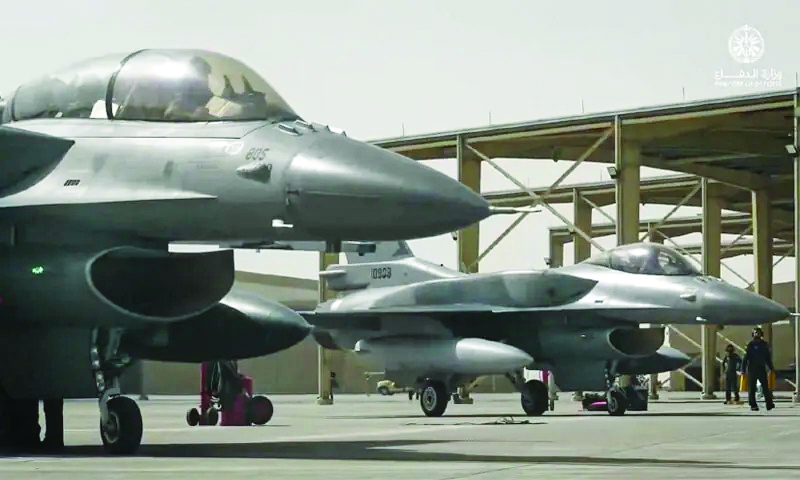
1983: January 15: First three F-16 jets reach Pakistan.
March 11: Nuclear tests: Kirana-I is carried out. The tests are not announced until 2000.
March 29: Foundation-stone of the Satellite Earth Station is laid near Rawalpindi.
September 29: The first phase of the local bodies election starts.
1984: February 9: Government imposes ban on all students unions.
March 18: Altaf Hussain forms MQM.
November 20: Renowned poet Faiz Ahmed Faiz dies.
1985: February 25: Party less national elections held.
March 23: Muhammad Khan Junejo sworn in as Prime Minister and General Zia as President.
October 16: National Assembly adopts Eighth Amendment Bill.
December 31: Martial Law is lifted, amended 1973 Constitution revived.
1986: April 10: Benazir Bhutto returns to Pakistan after self-exile.
July 8: Peshawar Dry Port is inaugurated.
September 5: Hijacked Pan Am Flight 73 is freed after commando action in Karachi.
1987: February 21: President Zia makes a surprise visit to India, and met Premier Rajiv Gandhi.
October 15: Qazi Hussain Ahmed becomes Amir of Jamat-i-Islami.
October 21: Jan Sher Khan wins World Open Squash Championship for the first time.
December 18: Benezir Bhutto marries Asif Ali Zardari.
1988: April 20: Jahangir Khan wins seventh Squash title in a row.
June 15: President General Zia promulgates Shariat Ordinance making Sharia the supreme law of the land.
August 17: General Zia-ul-Haq is killed in a plane crash near Bahawalpur.
December 2: Benazir Bhutto is sworn in as the first woman Prime Minister of Pakistan.
1989:
Jan 19: Students unions are restored in Punjab & won by IJT (Islami Jamiat-e-Talaba).
October 1: Pakistan rejoins Commonwealth.
October 20: SAF Games open in Islamabad.
1990: Feb 5: Kashmir Solidarity Day observed for the first time
August 6: President Ghulam Ishaq Khan dissolves National Assembly and dismisses Benazir Government. Ghulam Mustafa Jatoi becomes caretaker prime minister.
September 23: Sandak project signed between Pakistan and China at Beijing.
November 6: Nawaz Sharif was elected Prime Minister.
December 12: Pakistan becomes the 37th country to send an expedition to Antarctica.
1991: April 25: Jahangir Khan creates history by winning the British Open Squash title for the record tenth consecutive time.
July 17: Pakistan unveils the first battle tank Al-Khalid manufactured jointly by Pakistan and China.
1992: January 12: Lahore-Islamabad Motorway project launched.
March 25: Pakistan wins Cricket World Cup, defeating England by 22 runs in Melbourne, Australia.
April 26: Pakistan’s Alam Channa enters the Guinness Book of World Records as the tallest man in the world.
June 19: Military operation against MQM starts in.
1993: April 18: President Ghulam Ishaq Khan dissolves National Assembly, and dismisses Nawaz Sharif’s government. Balkh Sher Mazari becomes care-take prime minister.
May 26: Supreme Court restores National Assembly and Prime Minister Nawaz Sharif.
July 18: President Ghulam Ishaq Khan and Prime Minister Nawaz Sharif quit their offices.
October 6: General elections held. PPP wins 86; PML (N) secures 72 seats.
October 19: Benazir Bhutto is elected Prime Minister by 121 votes.
November 13: Farooq Laghari was elected the eighth President of Pakistan.
1994: January 15: Pakistan Television transmission gets access to 38 countries via satellite.
January 25: Benazir Bhutto inaugurates the country’s first women’s police station in Islamabad.
December 4: Pakistan regains the World Hockey Championship title after 12 years, beating Holand 4–3.
1995: July 8: WAPDA announces a record increase of 14.5 percent in electricity rates.
December 6: Lahore High Court dismisses appeal against the arrest of Maj. Gen. Zaheerul Islam Abbasi in Khilafat Conspiracy Case.
1996: February 11: Cricket World Cup jointly hosted by Pakistan, India, and Sri Lanka.
April 25: Imran Khan launches a new political party, Pakistan Tehrek-e-Insaf (PTI).
September 20: Mir Murtaza Bhutto was assassinated in Karachi.
November 5: Farooq Ahmed Leghari dissolves National Assembly sacking Premier Benazir Bhutto. Malik Mairaj Khalid becomes caretaker prime minister.
1997: February 17: Nawaz Sharif was sworn in as 19th Prime Minister.
May 21: Saeed Anwar slams a world record score of 194 runs against India.
August 16: Noted Pakistani singer, Nusrat Fateh Ali Khan died at the age of 49.
1998
March 8: The population census begins in the country.
May 28: Pakistan conducts nuclear tests in Chagai hills in Balochistan.
June 4: UN Security Council denies nuclear power status to Pakistan and India.
1999: February 21: Lahore Declaration is signed by Nawaz Sharif and A. B. Vajpayee.
April 15: Pakistan conducts a test of a nuclear-capable short-range ballistic missile, Shaheen.
July 26: Kargil War ends between Pakistan and India.
October 12: Nawaz Sharif is ousted from power and placed under house arrest after attempting to sack General Pervez Musharraf.
2000: April 6: Nawaz Sharif was sentenced to life imprisonment on charges of hijacking and terrorism.
December 10: Nawaz Sharif along with their family, was sent into exile in Saudi Arabia.
December 22: Famous singer, Noor Jahan dies in Karachi.
2001: June 21: General Pervez Musharraf assumes the office of President while remaining Chief of Army Staff.
September 16: US Secretary of State Powell told that Pakistan’s President Musharraf had agreed to support the U.S. anti-terrorist campaign.
2002: February 1: Wall Street Journal reporter, Daniel Pearl was killed in Karachi.
November 23: Mir Zafarullah Khan Jamali was sworn in as Prime Minister.
2003: July 11: Lahore-Delhi bus service resumed after a suspension of 18 months.
December 14: General Musharraf survived an assassination attempt in Rawalpindi.
2004: May 22: Pakistan readmitted to Commonwealth.
June 26: Prime Minister Zafarullah Khan Jamali steps down and nominates Ch. Shujaat Hussain is his interim successor.
August 28: Shaukat Aziz becomes Prime Minister.
2005: July 13: 136 people were killed and about 170 injured in a collision of three passenger trains near Ghotki.
July 19: The government of Pakistan launches a country-wide crackdown against extremist elements.
Oct 8: A devastating earthquake in Kashmir and NWFP kills over 80 thousand people.
2006: January 2: Dr. Shamshad Akhtar assumes the office of State Bank Governor having the first woman Governor of SBP.
May 14: Charter of democracy (CoD) is signed by two former prime ministers of Pakistan, Nawaz Sharif and Benazir Bhutto in London.
April 26: Pervez Musharraf lays the foundation stone of the Diamir-Bhasha dam.
August 26: Akbar Bugti is killed; his hide-out cave collapsed and killed everyone inside, including Pakistan Army soldiers that had come there for negotiation and talks with Akbar Bugti.
2007: March 9: President Musharraf dismissed Chief Justice of Pakistan, Iftikhar Chaudhry.
July 20: Iftikhar Chaudhry was restored as Chief Justice of Pakistan.
October 18: Benazir Bhutto returned to Pakistan, after an exile of about 8 years.
November 3: Pervez Musharraf imposed an emergency, and most of the senior judges of the Supreme Court were ousted.
November 25: Nawaz Sharif returned to Pakistan after 7 years of forced exile.
December 27: Bhutto, Benazir was assassinated in a blast/bullet attack in Rawalpindi.
2008: February 18: Elections are held amidst tight security. PPP, PML-N, PML-Q, and ANP win 124, 91, 54, and 13 seats respectively.
March 24: Yusuf Raza Gilani is elected as the new Prime Minister.
August 18: Pervaiz Musharraf steps down as President of Pakistan. Mohammad Mian Soomro takes over as President.
September 6: Asif Zardari wins the presidential election with 481 votes.
September 9: Asif Zardari takes oath as President of Pakistan.
2009: Feb 16: Taliban form Swat Valley as their sanctuary.March 9: Militants attack bus with the touring Sri Lankan cricket team. All international cricket matches in Pakistan are suspended. Pakistan also loses its status as host for the cricket World Cup 2011.
23 May-15 July 2009: Pakistan Army launched Operation Rah-e-Rast and cleared Swat Valley of all Taliban elements. It is regarded as one of the most successful counter-insurgency operations in the modern age
21 June 2009: Pakistan won the ICC T20 Cricket World Cup in Lord’s London England. Pakistan won by 8 wickets from Sri Lanka.
2010: April 10: Pakistan adopts the 18th amendment to the Constitution, stripping President Asif Ali Zardari of key powers.
June: Extensive flooding after monsoon rains. At least 1,600 people were killed.
July 28: The crash of Airblue Flight 202, killed all 152 people on board.
1 October: Pervez Musharraf launches his new political party, the All Pakistan Muslim League, at a club in London.
2011: January 4: Salmaan Taseer, the Governor of Punjab, is shot dead by one of his bodyguards in Islamabad for supporting a Blasphemy law accused named Asia Bibi.
April 22: Internationally renowned Pakistani actor, Moin Akhtar, dies at the age of 60 years in Karachi after suffering from a heart attack.
May 2: The US Navy Seals killed Osama bin Laden in the city of Abbottabad.
2012: 26 February: Sharmeen Obaid-Chinoy becomes the first Pakistani to ever win an Oscar at the 84th Academy Awards for the reconstructive surgery of acid attack victims, Saving Face wins for Best Documentary (Short Subject).
October 9: 14-year-old blogger Malala Yousafzai was shot in the head by the Pakistani Taliban.
2013: May 11: General Elections 2013 were held across Pakistan.
June 5: Nawaz Sharif is elected Prime Minister of Pakistan, following the Pakistan Muslim League (N)’s victory in the 2013 general elections for the 3rd time.
September 24: A 7.7 magnitude earthquake hits Baluchistan, at least 825 people are killed and hundreds injured.
October 10: Malala Yousafzai published her first book “I Am Malala:
November 1: Hakimullah Mehsud, leader of (TTP) was killed by a US drone attack.
November 29: Pakistan Chief of Army Staff, General Ashfaq Parvez Kayani retires. General Raheel Sharif becomes the next COAS.
December 11: Chief Justice Iftikhar Muhammad Chaudhry retired from his position, he remained in the Supreme Court from 2005 to 2013.
2014: January 9: 14-year-old boy Aitizaz Hassan in Hangu, KPK, is killed stopping a suicide bomber from entering the school.
March 31: A Pakistani court charges former President Pervez Musharraf with high treason in relation to the imposition of the emergency rule in 2007.
October 10: Activist Malala Yousafzai becomes the first Pakistani to win the Nobel Peace Prize for her struggle to voice girls’ right to education.
December 16: Taliban gunmen stormed a military-run Army Public Schools massacre in Peshawar, killing at least 141, including 132 children and nine employees, with most of five hundred students evacuated. The shooting ends with all seven gunmen dead.
2015: May 19: Zimbabwe cricket team toured Pakistan to play International Cricket Series for the first time since the 2009 attack on the Sri Lanka national cricket team.
2016: 4 February: The first season of the Pakistan Super League started.
7 December: PIA plane PK-661 crashed during flight killing 47 people including acclaimed former singer Junaid Jamshed and his wife.
2017: Mar 14: Pakistan’s sixth census begins.
June 18: Pakistan wins the 2017 ICC Champions Trophy defeating India in the finals.
July 28: A unanimous verdict by the Supreme Court of Pakistan disqualifies Prime Minister Nawaz Sharif from office, over the controversy of his and some of his family members’ names being in the Panama Papers, thus leading to his disqualification for a lifetime.
August 1: Shahid Khaqan Abbasi is sworn in as Prime Minister, succeeding Nawaz Sharif.
August 31: Benazir Bhutto assassination case is completed.

2018: 24–27 May: The twenty-fifth amendment to the Constitution of Pakistan was approved by the Parliament of Pakistan and the Provincial Assembly of Khyber Pakhtunkhwa (KP), giving way to the merger of the Federally Administered Tribal Areas (FATA) into the Province of Khyber Pakhtunkhwa (KP).
6 July: Former Prime Minister Nawaz Sharif, his daughter Maryam Nawaz and son-in-law Safdar Awan were given prison sentences of 10, 7, and 1 year respectfully on corruption charges.
25 July: The 2018 Pakistani general elections were held.
17 August: PTI leader Imran Khan took oath as Prime Minister of the Islamic Republic of
Pakistan.
4 September: The 2018 Pakistani presidential election was held.
December: former Minister Nawaz Sharif is sentenced to seven years in jail.
2019::24 September: The 2019 Kashmir earthquake struck regions of Pakistan with an epicenter in Azad Kashmir on 24 September at 16:02 local time (11:02 UTC). It had a magnitude of 5.6 Mw and a maximum felt the intensity of VII (very strong) on the Modified Mercalli scale.
31 October: Pakistan Railways’ Tezgam passenger train caught fire while traveling from Karachi to Rawalpindi, resulting in at least 75 passenger deaths.
October – November: Azadi march is an ongoing protest march led by Maulana Fazl-ur-Rehman of Jamiat Ulema-e-Islam (F) in Islamabad, Pakistan from 28 October 2019. The march opposes Prime Minister Imran Khan, demanding his resignation, and new elections.
11 December: Attack on Punjab Institute of Cardiology, Lahore.
17 Dec: Supreme Court gives death sentence verdict on Gen RT. Pervez Musharraf.
2020: February 1 Pakistan locust infestation – the government declared a national emergency to protect crops and help farmers
February 26: The first two cases of
COVID-19 is reported in Pakistan.
March 8: The Aurat (Women) March is an annual political demonstration organized in various cities of Pakistan.
May 22: Pakistan International Airlines Flight 8303 crashed in Karachi killing 97 of the 99 people on board as well as one on the ground.
June 19:The Supreme Court of Pakistan has quashed a presidential reference filed against Justice Qazi Faiz Esa.
June 30: Nigar Johar becomes Pakistan Army’s first female lieutenant general.
July 06: PM Imran Khan inaugurates the country’s first ever indigenously made ventilators at National Radio and Telecommunication Corporation (NRTC) in Haripur.
July 15: ‘Will build the biggest dam in Pakistan’s history: PM Imran kicks off construction work at Diamer-Bhasha Dam.
July 26: Pakistan Army downs this year’s 10th Indianspying quadcopter: ISPR
Aug 7: NAB summons Buzdar over liquor license ‘bribe’.
Source: https://en.wikipedia.org/
August At least 39 people were injured in an RGD-1 grenade attack on a Jamaat-i-Islami rally in the Gulshan-e-Iqbal neighborhood of Karachi. The Sindhudesh Revolutionary Army claimed responsibility for the attack.
10 Sep: PM Pakistan Launches “Roshan
Digital Account” For Overseas Pakistanis.
20 Oct – Pakistan after 10 days hiatus, Pakistan banned TikTok.
28 Oct: Federal Board of Revenue (FBR) sealed cellular Sim company Jazz’s head office after they did not pay 25 billion rupees in 2018.
31 Dec: The Samadhi of Shri Paramhans Ji Maharaj, a revered Hindu saint, and the Krishna Dwara temple situated in the Teri village in the Karak District of Khyber
Pakhtunkhwa province of Pakistan was attacked and burned, by a mob of 1,500 local Muslims led by a local Islamic cleric and the supporters of the Jamiat Ulema-e-Islam party. Source: en.wikipedia.org/wiki/2020_in_Pakistan#January &
https://matrixmag.com/timeline-
2021: Jan 5: The Supreme Court ordered that the Shri Paramhans Ji Maharaj Samadhi temple in Teri, Karak District, be rebuilt by the government after it was destroyed by a mob in December 2020.
Jan 9: A massive blackout strikes Pakistan, leaving as much as 90 percent of the country without electricity at its height as officials rush to restore power.
January 28 – A Malaysian court ordered the immediate release of the Pakistan International Airlines (PIA) plane which was seized on 15 January, at the Kuala Lumpur International Airport, over a lease dispute.
Feb 22:The Ippi shooting was a mass shooting in which two gunmen shot dead four
female aid workers. The attack occurred on 22 Feb in Ippi village, North Waziristan,
Khyber Pakhtunkhwa, Pakistan.
March 24: The 2021 Chaman bombings were two bombing attacks in Chaman, Balochistan, Pakistan, that occurred on 24 March and 21 May. These attacks left 9 people dead and another 27 injured.
April 11: The 2021 Pakistani protests were a series of protests and strikes in Pakistan from 11–20 April 2021. Mass protests first erupted after a series of calls for nationwide rallies and picketing against the government of Prime Minister Imran Khan and his cabinet, orchestrated by the banned far-right party Tehreek-e-Labaik Pakistan (TLP)
May 31: The 2021 Balochistan attacks were two attacks in Balochistan, Pakistan. These attacks left 4 soldiers and 4 insurgents dead and 2 soldiers wounded.
June 7: Two trains collided near Daharki, in the Ghotki District of the southern province of Sindh in Pakistan, killing at least 65 people and injuring about 150 others.
21 July: Three boats sank on the first day of Eid-ul-Adha in the Raghagan Dam in Bajaur, killing four people and leaving 20 missings.
6 Aug: PM Imran was given demo of Pak-made electronic voting machine
ISLAMABAD: Prime Minister Imran Khan on Thursday received a detailed presentation and a demonstration of a new locally-made electronic voting machine (EVM).
6 Aug: UK govt rejects Nawaz Sharif’s visa extension plea UK govt rejects Nawaz Sharif’s visa extension plea
(ANI): Former Pakistan prime minister Nawaz Sharif’s request for an extension in his visit visa has been rejected by the UK government, Geo News reported on Thursday.
Source:en.wikipedia.org/wiki/2021_in_
2022: Jan 8: At least 22 people, including 10 children, died in a popular mountain resort town in Pakistan after being stuck in their vehicles overnight during a heavy snowstorm as temperatures plummeted, officials said Saturday.
Aug 8: Pakistan’s trade with ASEAN topped $11b in 2022
Feb 28: Bilawal kick-starts march to dislodge PM Imran
March 31: The government confirmed on Wednesday that its allegation about a foreign conspiracy against the prime minister was based on a diplomatic cable received from one of the country’s missions abroad.
April 9: Hafiz Saeed sentenced to 33 years in jail
April 9: Expressing his disappointment with the Supreme Court’s decision that revived the no-confidence motion against him, Prime Minister Imran Khan issued a last-ditch call to the nation’s youth to take to the streets on Sunday night against what he termed an “imported government”,
Apri 11: Shehbaz made premier as ‘opposition’ forms govt
May 20: In the US, Bilawal defends Imran’s Moscow visit
May 27: New govt pays a big price to placate IMF
May 27: Imran ends long march ‘short of D-Chowk’
• Gives govt six days to dissolve assemblies, announce polls
• MNA claims this was the plan all along, admits party had provisions for a days-long sit-in
June 3: Imran’s narrative spurned by opponents
July 27: SC voids Hamza election, Elahi is the new CM
July 31: Shehbaz visits flood-hit Balochistan as dozens die across the country
Aug 2: Pak Army helicopter with six senior officers on relief mission feared crashed in Balochistan province
Aug 3: PTI received ‘prohibited’ funds, ECP rules
• Millions of dollars received from 351 foreign companies, 34 nationals, commission holds
Aug: 2: Pakistan Army helicopter crashed with 6 senior officers in Balochistan
Aug 10: Conspiracy being hatched to pit PTI against army: Imran
Source: Dawnnews.com, 2022