










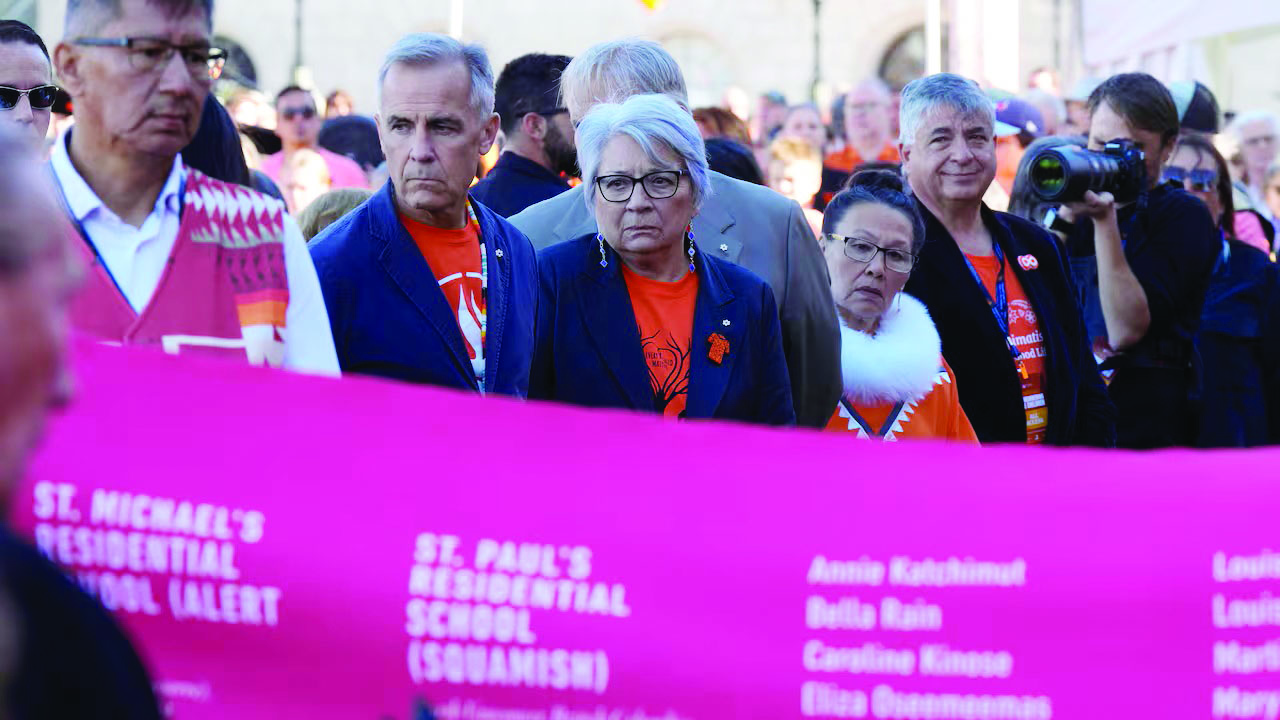
Building in Brantford, Ont., was once Mohawk Institute, Canada’s longest-running residential school. The Woodland Cultural Centre, a new museum that was once Canada’s longest-running residential school in Brantford, Ont., held its grand opening on the National Day for Truth and Reconciliation, drawing hundreds to the renovated building that highlights Indigenous language, culture, and art and history.
On Tuesday, some of those who came out told CBC News they wanted to learn about the history of the former Mohawk Institute, while others wanted to honour parents or grandparents who were forced to go there as children. Some 15,000 children from 60 communities were sent to the residential school, which was run by the Anglican Church and federal government from 1828 until 1970.
John Moses went to the museum opening with his cousins, Lesley and Patty Davis, who said they’re of mixed Mohawk and Mohican Delaware heritage. Around this time — this is the fifth year that Truth and Reconciliation Day has been marked as a federal holiday — Indigenous people are often asked what reconciliation means to them, said Moses.
“Reconciliation resides with non-Indigenous Canadians to reconcile themselves to what the true history of the country really is. And families like ours provide the truth telling.”
Standing where their relatives stood
While at the museum, the three stood with a framed photograph of Moses’s father, Russ, and Lesley and Patty’s mother, Thelma, in the same place where the photo was taken in October 1943 when the young siblings attended the institute.
The image, Moses said, shows the pair during a once-monthly 15-minute visit that the school allowed them. Moses said his father wrote a memoir about his experience at the school in 1965. The cousins said their parents refused to be defined by their harsh experiences at the school.
Russ went on to serve in the navy and play a leadership role in developing an Indigenous pavilion at Expo ‘67 in Montreal. Thelma was a leader who advocated for an apology from the Anglican Church for its part in residential schools, the cousins said.
Those schools had “a severe impact on the [First] Nations,” Lesley told CBC News. “That has to be acknowledged, reconciled … and never to be brought back here again.”
Moses said his father wrote a memoir about his experience at the school in 1965. The cousins said their parents refused to be defined by their harsh experiences at the school.
Russ went on to serve in the navy and play a leadership role in developing an Indigenous pavilion at Expo ‘67 in Montreal. Thelma was a leader who advocated for an apology from the Anglican Church for its part in residential schools, the cousins said.
Those schools had “a severe impact on the [First] Nations,” Lesley told CBC News. “That has to be acknowledged, reconciled … and never to be brought back here again.”
At least 105 died while enrolled at the Mohawk Institute, according to the Survivors’ Secretariat, a survivors-led group from the institute that aims to support investigations into missing children at the site. Students died of illness or injury, or ran away and died elsewhere… Source: cbc.ca/news
Source: aljazeera.com/news