




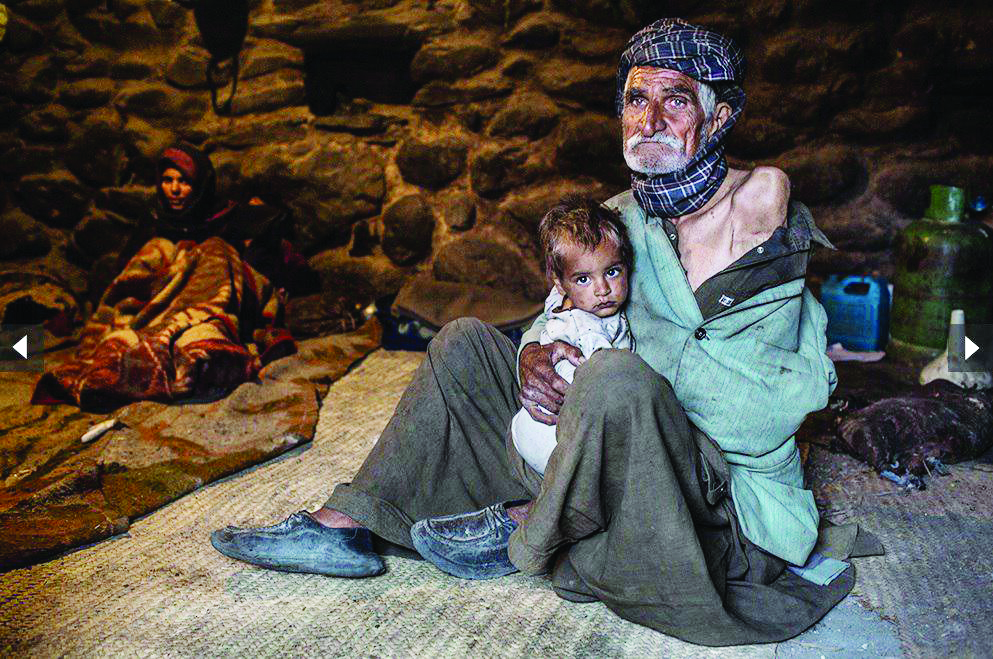



The Culture of Pakistan. Pākistāni Saqāfat) is based in the Indo-Persian cultural matrix that constitutes a foundation plank of South Asian Muslim identity. The region has formed a distinct cultural unit within the main cultural complex of South Asia, Middle East and Central Asia. There are differences in culture among the different ethnic groups in matters such as dress, food, and religion, especially where pre-Islamic customs differ from Islamic practices.
The existence of Pakistan as an Islamic state since 1956 has led to the large-scale injection of Islam into most aspects of Pakistani culture and everyday life, which has accordingly impacted the historical values and traditions of the Muslim-majority population. Marriages and other major events are significantly impacted by regional differences in culture, but generally follow Islamic jurisprudence where required.
Civil society in Pakistan is largely hierarchical, emphasising local cultural etiquette and traditional Islamic values that govern personal and political life. The basic family unit is the extended family, although for socio-economic reasons there has been a growing trend towards nuclear families. The traditional dress for both men and women is the shalwar kameez; trousers, jeans, and shirts are also popular among men.
In recent decades, the middle class has increased to around 35 million and the upper and upper-middle classes to around 17 million, and power is shifting from rural landowners to the urbanised elites.
Pakistani festivals, including Eid-ul-Fitr, Eid-ul-Azha, Ramazan, Christmas, Easter, Holi, and Diwali, are mostly religious in origin. Increasing globalisation has resulted in Pakistan ranking 56th on the A.T. Kearney/FP Globalization Index.
Source: en.wikipedia.org


The Art & Cultural of Pakistan
Pakistan’s cultural heritage dates to more than 5,000 years ago, to the period of the Indus civilization. However, the emphasis on Islamic ideology has brought about a strong romantic identification with Islamic culture—not only that of the Indian subcontinent but of the broader Islamic world. Literature, notably poetry, is the richest of all Pakistani art forms; music and, especially, modern dance have received less attention. The visual arts too play little part in popular folk culture. Painting and sculpture, however, have made considerable progress as expressions of an increasingly sophisticated urban culture.
Pakistan shares with the other parts of South Asia the great Mughal heritage in art, literature, architecture, and manners. The ruins of Mohenjo-daro, the ancient city of Taxila, and the Rohtas Fort of Shīr Shah of Sūr are but a few of the places in Pakistan that have been named UNESCO World Heritage sites. The Mosque of the Pearls, Badshahi Mosque, and Shalimar Garden, all in Lahore, are among the country’s architectural gems.
Bhangra
Popular traditional folk dances include the bhangra (an explosive dance developed in Punjab) and khatak steps. The khatak is a martial dance of the tribal Pashtuns that involves energetic miming of warriors’ exploits. There are a number of traditional dances associated with women; these include a humorous song and dance called the giddha, a whirling dance performed by girls and young women called the kikli, and a form in which dancers snap their fingers and clap their hands while bounding in a circle. The luddi is a Punjabi dance usually performed by males, typically to celebrate a victory—formerly victory in a military conflict but now in a sports contest.
Source: britannica.com
 Pakistani Cuisines
Pakistani cuisine romanized: pākistānī pakwān) can be characterised as a vibrant blend of regional cooking styles and flavours from across South, Central and Western Asia, as well as ingredients, recipes and techniques borrowed from the Indian Subcontinent, Persian cuisine and Arab cuisine. The cuisine of Pakistan also maintains certain Mughal influences within its recipes and techniques. The country’s various cuisines are varied from place to place, with its ethnic and cultural diversity, as well as diverse climates and geographical environments, and availability of different produce options.
Pakistani cuisine, as in the food culture of most Muslim nations, is structured around halal principles (similar to Judaism and Kosher), which—for example—forbid pork and alcohol consumption in accordance with Sharia, the religious laws of Islam. Many more details of halal regulations apply to meats, which types of animals are acceptable or “clean” for human consumption—for example, pigs enjoy wallowing in mud, and are thus deemed “unclean”. Further important points declare precisely how animals are to be slaughtered; it must be done quickly and with minimal suffering, with the animal’s awareness of the situation being extremely brief (preferably nonexistent, as stress releases cortisol and adrenaline, potentially spoiling meat quality). The animals must also be raised (more or less) “free-range”, with sufficient freedom of movement provided, as halal principles forbid the consumption of sickly, stressed, abused, beaten, cancerous or otherwise mistreated or unhealthy animals. Additionally, animals that are killed inadvertently, or during accidents or found deceased by the roadside, are forbidden, as the intention was not slaughter in those cases.
International cuisine and fast food are popular in major cities such as Islamabad and Karachi; blending local and foreign recipes (fusion food), such as Pakistani Chinese cuisine, is also common in large urban centres. As a result of lifestyle changes, health trends, and new dietary research being published, traditional ingredients such as masala (pre-mixed and ready-to-use) and ghee (clarified butter)—with its health benefits and high smoke pointhave been increasingly popular.
Languages of Pakistan
Pakistan is a multilingual country with dozens of languages spoken as first languages. The majority of Pakistan’s languages belong to the Indo-Iranian group of the Indo-European language family.
Urdu is the national language and the lingua franca of Pakistan, and while sharing official status with English, it is the preferred and dominant language used for inter-communication between different ethnic groups. Numerous regional languages are spoken as first languages by Pakistan’s various ethnolinguistic groups. Languages with more than a million speakers each include Punjabi, Pashto, Sindhi, Saraiki, Urdu, Balochi, Hindko, Gujari, Pahari-Pothwari[a] and Brahui. There are approximately 60 local languages with fewer than a million speakers.
Religions in Pakistan
The official religion of Pakistan is Islam, as enshrined by Article 2 of the Constitution, and is practised by approximately 96.47% of the country’s population. The remaining 3.53% practice Hinduism, Christianity, Ahmadiyya Islam (recognised as a non-Muslim group by the Pakistani constitution[8]), Sikhism and other religions.
A few aspects of secularism have also been adopted by Pakistani constitution from British colonial concept. However, religious minorities in Pakistan often face significant discrimination, subject to issues such as violence and the blasphemy laws.
Muslims comprise a number of sects: the majority practice Sunni Islam (estimated at 90%), while a minority practice Shia Islam (estimated at 10%). Most Pakistani Sunni Muslims belong to the Hanafi school of jurisprudence, which is represented by the Barelvi and Deobandi traditions. However, the Hanbali school is gaining popularity recently due to Wahhabi influence from the Middle East. The majority of Pakistani Shia Muslims belong to the Twelver Islamic law school, with significant minority groups who practice Ismailism, which is composed of Nizari (Aga Khanis), Mustaali, Dawoodi Bohra, Sulaymani, and others.
Before the arrival of Islam beginning in the 8th century, the region comprising Pakistan was home to a diverse plethora of faiths, including Hinduism, Buddhism, Jainism and Zoroastrianism.
Constitutional provisions
The Constitution of Pakistan establishes Islam as the state religion, and provides that all citizens have the right to profess, practice and propagate their religion subject to law, public order, and morality.
The Constitution also states that all laws are to conform with the injunctions of Islam as laid down in the Quran and Sunnah.
The Constitution limits the political rights of Pakistan’s non-Muslims. Only Muslims are allowed to become the President[26] or the Prime Minister. Only Muslims are allowed to serve as judges in the Federal Shariat Court, which has the power to strike down any law deemed un-Islamic, though its judgments can be overruled by the Supreme Court of Pakistan.[ However, non-Muslims have served as judges in the High Courts and Supreme Court. In 2019, Naveed Amir, a Christian member of the National Assembly moved a bill to amend the articles 41 and 91 of the Constitution which would allow non-Muslims to become Prime Minister and President of Pakistan. However, Pakistan’s parliament blocked the bill.
 Sports in Pakistan
Sport in Pakistan is a significant part of Pakistani culture. Cricket is the most popular sport in Pakistan, while field hockey, polo, and squash are also popular. Traditional sports like kabaddi and other well-known games are also played. The Pakistan Sports Board was created in 1962 by the Ministry of Education as a corporate body for the purposes of promoting and developing uniform standards of competition in sports in Pakistan comparable to the standards prevailing internationally, and regulating and controlling sports in Pakistan on a national basis. The Ministry of Culture, Sports and Tourism, now has control over the Pakistan Sports Board. The PSB controls all 39 sporting federations. The Pakistan Sports Board is supported by the Pakistan Sports Trust, which assists hard-up players and associations so they can continue participating in sports.
Over recent years there has been an increase in sporting activity in Pakistan, with Pakistani sportsmen and women participating at many national and international events. Also, more international tournaments now take place in Pakistan. The size of the teams Pakistan sends, and the number of events they participate in, such as the Olympic Games, Asian Games, World Games, and Commonwealth Games has increased since the turn of the century…Source: en.wikipedia.org
