
















Every year on February 5, Kashmir Day is observed in Pakistan and outside the Pakistan with great enthusiasm.
Government institutions organize elaborate ceremonies and renew the pledge that Kashmir is Pakistan’s jugular vein and that we stand shoulder to shoulder with the Kashmiris. Similarly, August 5 is observed as the Day of Exploitation to raise our voice for Kashmir. But the real question is: what have the Kashmiri people actually gained from these slogans and claims over the past seventy years?
It now seems as if regions like Kashmir have been completely ignored by the world. It is neither meaningfully discussed anywhere nor effectively raised at the United Nations. Global media attention is now focused mainly on Gaza, Ukraine, Syria, Yemen, and other regions of the Muslim world, including Sudan and Somalia. In Pakistan, however, Kashmir is often used as a political card in the name of democracy and is widely exploited during elections.
“We will take Kashmir,
we will liberate Kashmir.”
“Kashmir is closer to us than our jugular vein.”
In the same way, military institutions have invested massive resources in weaponry in the name of Kashmir. Yet the outcome of the last seventy to seventy-eight years has been such that, God forbid, we may have to face similar humiliation again in the future over the Kashmir issue.
As the saying goes:
“Why worry about others when you can’t even fix your own problems?”
This proverb fits perfectly here.
The people of occupied Kashmir must be given the right to decide their own future. While constantly raising our voice for occupied Kashmir, we failed to even protect “Azad Kashmir” from India’s watchful eye.
India’s grip over Kashmir has gradually strengthened, while Pakistan appears practically helpless in stopping this situation. We even fought wars over this issue, to the point that the country itself was once split into two. Yet even today, our official statements and military slogans remain the same: that we are ready to sacrifice our lives for Kashmir’s freedom. But what kind of sacrifice is this when we are unable to establish peace in our own province of Balochistan?
The current situation in Balochistan is no secret. Government incompetence, neglect, and continuous insecurity have paralyzed the province. For ordinary citizens, traveling from one province to another—especially entering Balochistan—has become extremely difficult. Terrorist attacks occur frequently; for a few days it is claimed that dozens of terrorists have been killed, and then silence follows.
It is deeply concerning that a country with an army of five to seven hundred thousand soldiers has failed to permanently control a limited number of militants in Khyber Pakhtunkhwa and has also been unable to curb the growing unrest in Balochistan. Blaming everything on India is easy, but if this is truly a foreign conspiracy, where is the concrete evidence? Why has such evidence not been effectively presented at the international level? Why has the military failed so far to eliminate terrorism?
Pakistan forms countless committees on Kashmir, wastes funds, and engages in hollow sloganeering. Yet for more than seven decades, there has been no meaningful development in its own province of Balochistan, no prosperity for the people, and no security provided. Why is this so? How long will we continue to sell this illusion and deceive the public?
Balochistan, a region rich in mineral resources, has today become a picture of insecurity, poverty, and helplessness. Claims are made that development is taking place there, but the ground reality is that businesses are paralyzed, life has become unbearable, and the people are in a state of severe anxiety. Resources are being traded away, and it is no longer hidden from the public who is doing this and with whom.
How long will all this continue? Will we keep observing days in the name of Kashmir while depriving our own provinces—especially Balochistan and Khyber Pakhtunkhwa—of their basic rights?
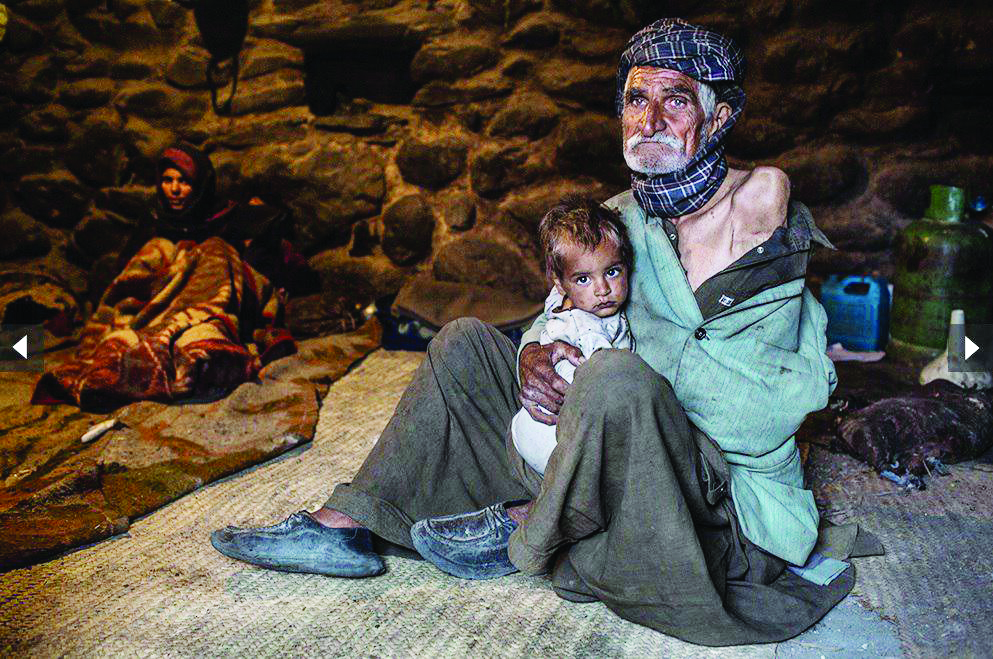
In Teerah Valley (District Khyber), the treatment meted out to the public by the security forces has sparked intense public resentment. The number of terrorists killed is far less than the number of poor men, women, and children who have been forced onto the streets in the harsh winter cold. The government and the so-called state security institutions must seriously reflect on whether terrorism can really be eliminated in this manner. Such operations are repeated every one or two years, yet within a few months the situation returns to where it was before. Why does this keep happening? This question is no longer confined to newspaper editorials; it now demands a response from the nation’s collective conscience.
“Waan Laysa Lil
Insana illa ma’ sa’aa “
That man can have nothing but what he strives for.