


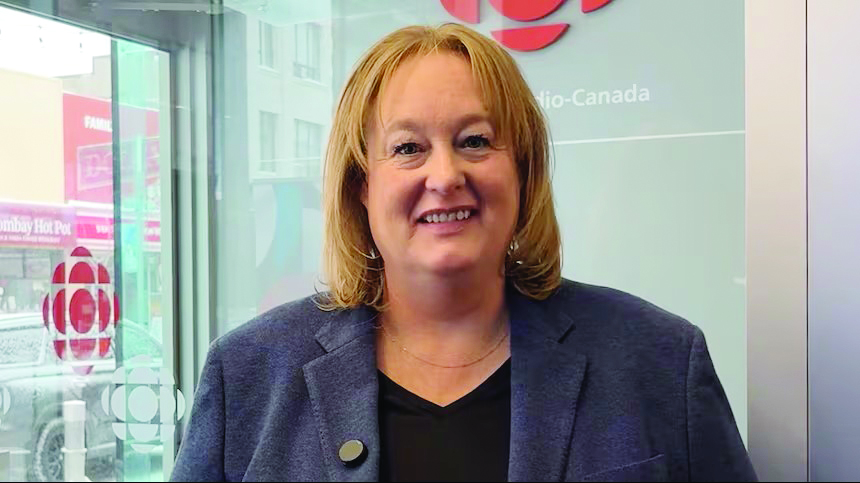







 On the occasion of Canadian Islamic History, Stephen Quinn of CBC’s Early edition spoke with Misbah Naseer, the Executive Director of Voices of Muslim Women Foundation to discuss the role of Muslims, particularly Muslim women in Canadian history.
The following excerpt is from the radio interview on CBC Radio and has been reproduced for the readers’ interest.
Steven Quinn (SQ): Why is it important for you to be shedding light on Islamic Heritage Month and Muslim women and girls in particular?
Misbah Naseer (MN): Well, Islamic History Month is near and dear to my heart because just like all the other Canadians, Muslims have made a remarkable contribution to Canadian History and our history is rich with examples of exceptional women and Muslim women are part of those groups of trailblazers as well.
I look back as far as 1930s when it was a group of Muslim women led by Hilwie Hamdan who were the driving force behind the foundation of Canada’s first mosque, which was in Edmonton, Al-Rasheed. So October or any other month is a great time to bring forward these stories.
(SQ): Tell me a little more about that Story in particular about how that all came to be.
MN: In the 1930s, there were about a few hundred of Arab Muslims Canadians who had immigrated to Edmonton and the vicinity and there was no mosque at the time. Hilwie Hamdan, who belonged to the Muslim community, got together with a group of Muslim women and met with the mayor of Edmonton at that time regarding a lot to be allotted for the mosque. The Mayor agreed, as long as the construction was being fundraised by the community itself. Hilwie and her friends went door to door, across the neighborhoods, to the churches, to the synagogues in the area and it was really an interfaith effort to bring the community together and have this place of worship and now its still thriving well in Edmonton.
SQ: Wow that’s amazing. So these women were supported by other religious denominations and organizations
MN: That’s what the history says. Yes, It was an interfaith effort I would say but it was led by a woman, a Muslim woman and a group of other women supported by the community and allies, of course.
SQ: This was done in the 1930’s and I think there would be a very different outcome if Muslim women went looking for the same thing.
MN: Exactly, It’s 1938 when the mosque was established. This is very close to when women are just recognized in Canada, all women are recognized as a person/ I think if you put it in that context, the broader context of women’s history in Canada, this was nothing but truly remarkable.
SQ: Misbah, Muslim representation in the arts we see it in politics, it’s come a long way but Muslims still are the target of hate crimes. In fact, there was a federal study last year that showed hate crimes targeting Muslims and jumped by 71% in 2021 in Canada. Do you think that recognizing Islamic faith through something like Islamic History Month can help push back on that?
MN: For sure. I think it helps us to have those conversations- sometimes even difficult conversations with our colleagues at work and with our friends. I know this year we saw the first Muslim woman who became Canada’s first special representative on combating Islamophobia, Dr. Amira Elghawaby and I think those are all great steps. Every time we have those discussions we have been bringing forward such positive stories, local Canadian stories, and they are not always in the media but every time we have the opportunity to talk about them it changes the narrative and helps dismantle the stereotypes.
SQ: Do you think non-Muslim Canadians fully understand just how long Muslims have been in this country?
MN: I am not sure if that has been highlighted. I will be super honest- It wasn’t until a few years ago, when I was watching a documentary on Telus with my son that I realized the story of the first mosque and it has really intrigued me. As a Muslim myself, who has grown up here in Canada, this wasn’t well advertised but I think initiatives like Islamic History Islamic Month has definitely brought forward many stories across the diverse Muslim cultures in Canada and it helps both non- Muslims Canadians and Muslims Canadians alike.
SQ: What is something you would like non- Muslim Canadians to understand better about your community?
MN: … Like you said Steven, we have come a long way. What the community sees is that the Muslim community – we are no different then all the rest of us in Canada. I may have a hijab on my head but I am still passionate about things, I watch the same TV shows, and my daughter still listens to Taylor Swift so we are not much different.
Our faith makes us different from just like any other faith community but we all believe in the same Canadian rights and the values the rest of the Canadians believe in. I think it’s not about bringing us into the mainstream, we are mainstream.
