
















Six months after Hardeep Singh Nijjar’s assassination, his community members face threats but say they’re not defeated.
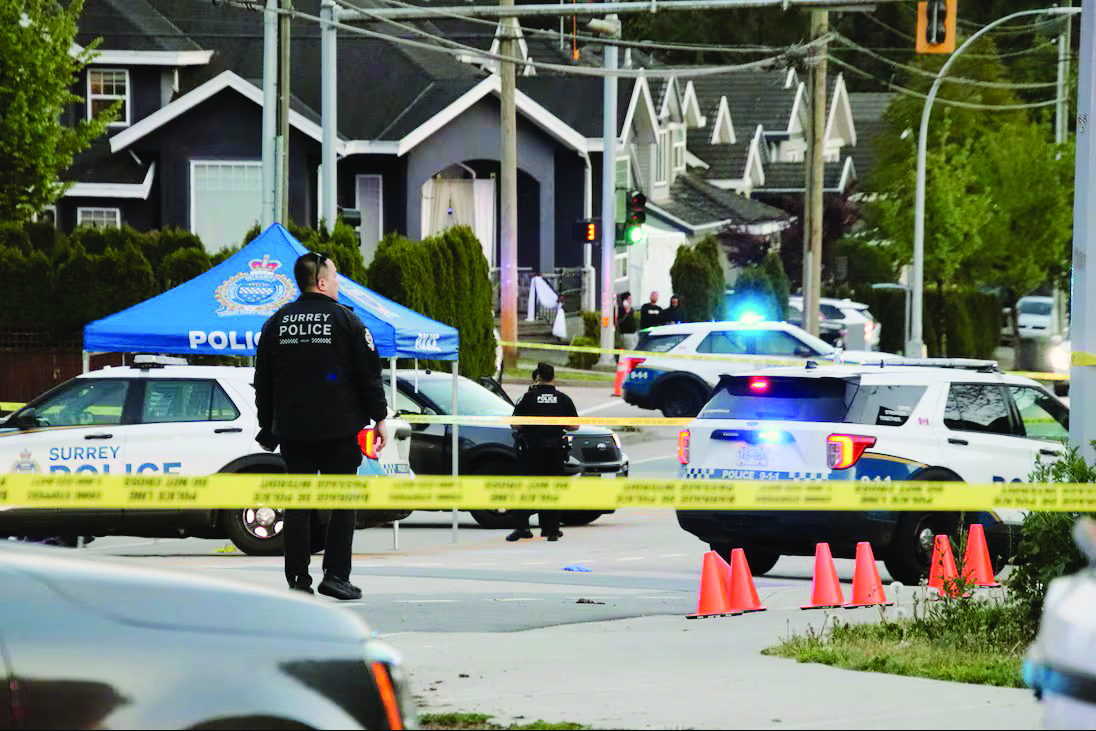
Surrey, British Columbia – On a Saturday afternoon in a Sikh temple in Surrey, Canada, boys and men with determined faces wield swords and sticks at each other in an ancient martial art called gatka.
“We are a rebellious community,” Gurkeerat Singh, a farmer, electrician, photographer and spokesperson for the Guru Nanak Sikh Gurdwara Temple, tells me. Surrey is about a 45-minute train ride outside of Vancouver. The city of half a million people is home to the second-largest Sikh population in the country. Today, as the first snow of the season melts in puddles outside the building, there’s a small but encouraging crowd watching the gatka tournament inside. “From a young age, we teach our children to be armed and learn how to defend themselves,” says Gurkeerat.
That need for the community to defend itself no longer feels like a hypothetical scenario in this fast-paced suburban city, which has the slogan: “The future lives here”. Not since the assassination of Sikh separatist Hardeep Singh Nijjar in Surrey in June.
“The game has completely changed,” says 42-year-old Moninder Singh, a spokesperson for the British Columbia Gurdwaras Council. “Now, it’s no longer, you live to fight another day but you don’t know if you’ll live, the way they’re operating. Hardeep’s assassination, although not a surprise, was still unprecedented.”
“They” refers to the Indian government and “you” to the Sikh community in Surrey, which is at the eye of a major diplomatic and political storm that has engulfed relations between Ottawa and New Delhi relations. Nijjar, the Guru Nanak Sikh Gurudwara president who came to Canada as a refugee in 1997 from Punjab in northwest India, was driving out of the temple’s parking lot in his pick-up when he was shot dead by two masked assailants on June 18 – Father’s Day.
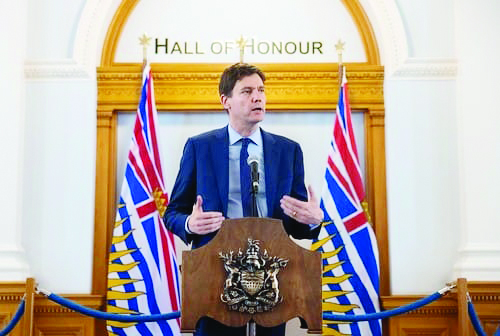
Many in the community believe the killers were local gangsters, hired by the Indian state. They felt vindicated when Canadian Prime Minister Justin Trudeau announced to Parliament in September that there was credible evidence that India had a hand in the killing of Nijjar.
It set off a diplomatic war: Each country expelled diplomats from the other, trade talks stalled and even visa services were temporarily affected. At the heart of the accusation against India lies its effort to crush a separatist Sikh movement that Nijjar advocated for vocally. For the past four decades, many Sikhs in communities around the world have been demanding that an independent Sikh state, known as Khalistan, be carved out for them in Punjab. India designated Nijjar and other pro-Khalistan leaders of the Sikh diaspora, such as New York-based Gurpatwant Singh Pannun, as “terrorists” – a charge they and their supporters deny.
And in November, federal prosecutors in the United States indicted an Indian hitman on charges of working with Indian government intelligence in a bid to kill Pannun, lending further credence to concerns that New Delhi was deploying kill squads for targeted assassinations abroad.
The Indian government has insisted that such acts are not a part of its policy and said it is investigating the US allegations regarding the plot against Pannun.
Six months after the murder of 45-year-old Nijjar, a married plumber and father of two, several Sikh leaders in Surrey say they have received threats on social media. Some have been alerted to threats by Canadian officials. But many in the community say that whatever happens, they will not be silenced or defeated….Source:.cbc.ca/news/
Monday, May 4, 2026