










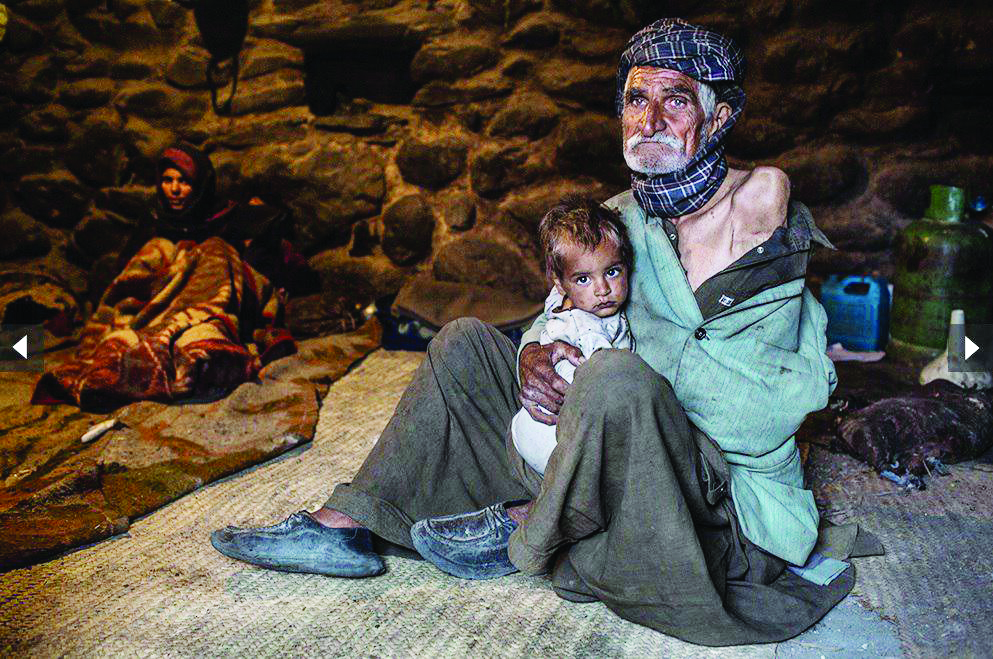



Myanmar’s military carried out mass killings and gang rapes of Rohingya with “genocidal intent” and the commander-in-chief and five generals should be prosecuted, UN investigators said on Monday.
It was the first time the United Nations explicitly called for Myanmar officials to face genocide charges over their campaign against the Rohingya, and is likely to deepen the Southeast Asian nation’s isolation.
The UN mission found Myanmar’s armed forces had taken actions that “undoubtedly amount to the gravest crimes under international law”, forcing more than 700,000 Rohingya to flee starting in late August 2017.
Speaking in Geneva on Monday, Marzuki Darusman, the mission’s chairman, said his researchers amassed evidence based on 875 interviews with witnesses and victims, satellite imagery, and verified photos and videos.
Marzuki said victim accounts were “amongst the most shocking human rights violations” he had come across and would “leave a mark on all of us for the rest of our lives”.
He described Myanmar’s military as having shown “flagrant disregard for lives” and displayed “extreme levels of brutality”.
“The Rohingya are in a continuing situation of severe systemic and institutionalised oppression from birth to death,” Marzuki said.
The UN does not apply the word “genocide” lightly.
Its assessment suggests crimes against the Rohingya could meet the strict legal definition used in places such as Bosnia, Rwanda and Sudan’s Darfur region.
The team cited a “conservative” estimate from aid group Reporters Without Borders that some 10,000 people had been killed in the violence, but outside investigators have had no access to the affected regions, making a precise accounting elusive, if not impossible.
The UN report said military generals, including Commander-in-Chief Min Aung Hlaing, must face investigation and prosecution for “genocidal intent” in Myanmar’s northern Rakhine state, as well as crimes against humanity and other war crimes in the states of Kachin and Shan.
The report singled out Myanmar’s military, known as the Tatmadaw, but added that other Myanmar security agencies were also involved in abuses.
“Military necessity would never justify killing indiscriminately, gang-raping women, assaulting children, and burning entire villages,” the report said.
“The Tatmadaw’s tactics are consistently and grossly disproportionate to actual security threats, especially in Rakhine state but also in northern Myanmar.”
In Rakhine state, there was evidence of extermination and deportation, the report added.
“The crimes in Rakhine state, and the manner in which they were perpetrated, are similar in nature, gravity and scope to those that have allowed genocidal intent to be established in other contexts,” the UN mission concluded, adding there was “sufficient information” to prosecute the military’s chain of command.
Christopher Sidoti, a member of the investigatory committee, urged the UN Security Council and General Assembly to act on the report’s findings.
“We are convinced the international community holds the key to dismantling the destructive veil of impunity in Myanmar,” he said “What we’ve heard in the report really lines up with witness testimonies I’ve heard here. For most of the past year, when official bodies of governance spoke about the atrocities committed in Rakhine state, they called it ethnic cleansing.
Now there’s a very extensive UN fact-finding mission recommending that top tier military officials in Myanmar be prosecuted and investigated for genocide.
When the members of the panel in Geneva laid out their investigation, they said that they conducted 875 interviews, they talked about the destructive veil of impunity in Myanmar and they said that until that is lifted, the cycle of violence in Myanmar will continue. They said there needs to be a mechanism by which these crimes can be prosecuted and the cycle of violence in Myanmar can be ended.
That’s going to be very difficult, we don’t know exactly where this goes. At some point, it will be presented to the UN Human Rights Council and then potentially to the UN Security Council.
But we must remember that Myanmar is not a signatory to the Rome Statute, so the International Criminal Court does not have jurisdiction Investigators compiled a list of suspects, which included Min Aung Hlaing and other military commanders.
The mission said a full list of suspects will be made available to any credible body pursuing accountability, adding that the case should be referred to the International Criminal Court, or an ad hoc criminal tribunal.
Investigators documented mass killings, the destruction of Rohingya dwellings, and “large-scale” gang rape by Myanmar soldiers.
The UN’s report drew praise from the ground in Cox’s Bazar, Bangladesh, where refugee camps have taken in hundreds of thousands of Rohingya from across the border.
“We are happy for this. If these army people are punished the world will take note of it. They are killers. They must be punished,” said Mohammed Hasan, 46, who lives in the Kutupalong refugee camp.
“They killed thousands, we have seen that. They torched our homes, that’s a fact. They raped our women, that’s not false.”
Source: Al-Jazeera
 US Secretary of Defense: ‘Iran will be held accountable for reckless behavior in the region’
A string of senior American officials offer fresh warnings about Tehran’s aggressive foreign policy Trump’s new top Iran advisor Brian Hook accuses Tehran of economic mismanagement
PENTAGON: The US Secretary of Defense Jim Mattis said on Tuesday that Iran would be “held accountable” for its reckless behavior in the region.
He was speaking as a string of senior American officials offered fresh warnings about Tehran’s aggressive foreign policy and the effect it has on destabilizing the Middle East.
Mattis said that Iran had been “put on notice” that its “continued mischief” in the region — including its support for Houthi rebels in Yemen and supplying of missiles fired into Saudi Arabia, as well as threats to the Strait of Hormuz — would not be tolerated by the US and its allies.
The Defense Secretary went on to say that Iran was the “single biggest destabilizing element in the Middle East region.”
In Washington, Brian Hook, the Trump administration’s newly appointed special representative for Iran, said Tehran’s policy of destabilizing its neighbors come at the expense of the Iranian people.
Speaking at an event at the Foundation for the Defense of Democracies think tank, the envoy highlighted the vast sums spent by Iran on funding Hizbollah and other proxy groups across the Middle East. Slogans making similar points have been chanted at anti-regime protests in Iran in recent months. The protests have intensified as Iran plunges further into an economic crisis exacerbated by a return of tough US sanctions after Donald Trump pulled out of a deal to curb Tehran’s nuclear program.
“The regime’s economic mismanagement has put the country in a tailspin,” Hook said. “The rial’s value has collapsed in the past year. A third of Iranian youth are unemployed. A third of Iranians now live in poverty. “Regime leaders should feel painful consequences of their violence, bad decision making and corruption,” Hook added in reference to the sanctions.Speaking at the same event, Nikki Haley, the US ambassador to the UN, said Iran continued to be the primary source of instability in the Middle East.
Matiss made his comments at an extended press briefing at the Penatgon, during which various issues across the region were discussed.When questioned about chemical weapons use in Syria, Mattis said that the US had recently discussed the use of chemical weapons in the country with Russia, after media reports that Syria was moving chemical weapons into a rebel-held area the government seeks to recapture.
“You have seen our administration act twice on the use of chemical weapons,” Mattis told reporters. “I will assure you that (the) Department of State has been in active communication, recent active communication, with Russia to enlist them in preventing this … The communication is going on.”
Source: arabnews.com
 War of words between US-Russia as Syria attack looms
Russia has deployed a dozen warships to the Mediterranean Sea in what a Russian newspaper on Tuesday called Moscow’s largest naval buildup since it entered the Syrian conflict in 2015.
The reinforcement comes as Russia’s ally, Syrian President Bashar al-Assad, is believed to be considering a major assault on the last rebel-held enclave in northern Idlib province.
Russia has accused the United States of building up its own forces in the Middle East in preparation for a possible strike on Syrian government forces.On Saturday, the Admiral Grigorovich and Admiral Essen frigates sailed through Turkey’s Bosphorus towards the Mediterranean, Reuters news agency images showed.
The day before, the Pytlivy frigate and landing ship Nikolai Filchenkov were pictured sailing through the Turkish straits that connect the Black Sea with the Mediterranean. The Vishny Volochek missile corvette passed through earlier this month. The Izvestia newspaper said Russia had gathered its largest naval presence in the Mediterranean since it intervened in Syria in 2015 and turned the war’s tide in Assad’s favour.
The force included 10 vessels, most of them armed with long-range Kalibr cruise missiles, Izvestia wrote, adding more ships were on the way. Two submarines had also been deployed.
The Syrian government is gearing up for an expected offensive in Idlib province, which is home to nearly three million people and has a large al-Qaeda presence in addition to several Syrian rebel groups.
It borders Turkey, which fears an offensive may trigger a humanitarian and security catastrophe.
The United States on Tuesday warned the Russian and Syrian governments against chemical weapon use in Syria.State Department spokeswoman Heather Nauert said the United States “will respond to any verified chemical weapons use in Idlib or elsewhere in Syria … in a swift and appropriate manner”.The comments came as Russia again accused Syrian rebels of preparing a chemical attack that Moscow said will be used to justify a Western strike against Syrian troops.
Russia’s Deputy Foreign Minister Sergei Ryabkov said on Tuesday an al-Qaeda-linked group is preparing the attack in Idlib.
Western countries and independent analysts say Syrian government forces have conducted several chemical weapons attacks over the course of the seven-year civil war. Alleged chemical attacks in 2017 and earlier this year led the US to launch punitive strikes against Syrian forces.
The Syrian government denies ever using chemical weapons.
Damascus has been sending reinforcements towards Idlib for weeks ahead of an expected attack against the last major rebel stronghold in the country.
Last week, Russian Major General Alexei Tsygankov, who heads the centre for reconciliation of warring parties in Syria, claimed British special services were involved in plans for the alleged provocation.
That brought a heated denial from Britain’s UN Ambassador Karen Pierce during a Security Council session on the humanitarian situation in Syria held on Tuesday.
“Even by the egregious standards of Russian propaganda, this is an extraordinary allegation,” she said. “It is wholly untrue.”She said the claim was either aimed at increasing “the amount of fake news in the system [or] as a smoke screen for a possible impending attack by the Syrian regime, once again against its own people, in Idlib”.Russia’s UN Ambassador Vassily Nebenzia said “if the defence ministry says something, then it says that based on concrete facts”.
“The Syrian armed forces do not have chemical weapons and have no plans to use them. There is no military need for that. We have stated that more than once. People in their right minds will not use means that are useless from a military point of view in order to trigger reprisals by three major powers,” said Nebenzia.The UN director of humanitarian operations warned a major offensive in Idlib “has the potential to create a humanitarian emergency at a scale not yet seen” in the seven-year civil war.John Ging called on members of the UN Security Council on Tuesday “to do all they can to ensure that we avoid this”.
Source: Al-Jazeera
 US rejects UN court jurisdiction over Iran sanctions case
The United States told the UN’s top court it has no jurisdiction to rule on Iran’s demand for the suspension of nuclear-related sanctions recently reimposed on the country.
The International Court of Justice (ICJ) in The Hague “lacks prima facie jurisdiction to hear Iran’s claims”, US State Department lawyer Jennifer Newstead argued on Tuesday.During the first hearing of the case on Monday, Iran argued that US President Donald Trump breached a 1955 treaty with his decision to reimpose sanctions after withdrawing from the landmark 2015 nuclear deal with world powers.
Newstead said the US has the right to protect its national security and other interests.
She said the treaty “cannot, therefore, provide a basis for this court’s jurisdiction” in the case.
Sanctions on Iran were lifted under the 2015 accord with the five permanent members of the UN Security Council plus Germany and the European Union. In return, Tehran committed not to develop nuclear weapons.
However, Trump said the deal did not do enough to curb the alleged threat from Iran. He pulled the US out of the accord in May and began reimposing sanctions earlier this month.“This case is entirely about an attempt to compel the US by order of this court to resume” the 2015 nuclear deal, Newstead said.
On Monday, Iran’s lawyers said the sanctions were threatening the welfare of its citizens and disrupting tens of billions of dollars worth of business deals.
The Islamic Republic’s lead representative in the case, Mohsen Mohebi, branded the sanctions “naked economic aggression”.
“The United States is publicly propagating a policy intended to damage as severely as possible Iran’s economy and Iranian nationals and companies,” Mohebi said.
“Iran will put up the strongest resistance to the US economic strangulation by all peaceful means.”But the US lawyers held Iran to blame for its economic woes.
They have “deep roots in the Iranian government’s mismanagement of its own economy and repression of its own population”, Newstead said. The court in the Netherlands adjourned until Wednesday when Iran will have the opportunity to respond to the US’ arguments. The ICJ is expected to take several weeks to decide whether to grant Tehran’s request. A final decision could take years.
Its judgements are binding, final and without appeal, however, it has no power to enforce its decisions.
However, whether any decision will be implemented remains unclear. Both Iran and the US in the past have ignored the UN court’s rulings against them.
Despite the 1955 Treaty of Amity and Economic Relations, the two countries have not had diplomatic ties since 1980.
Source: Al-Jazeera