










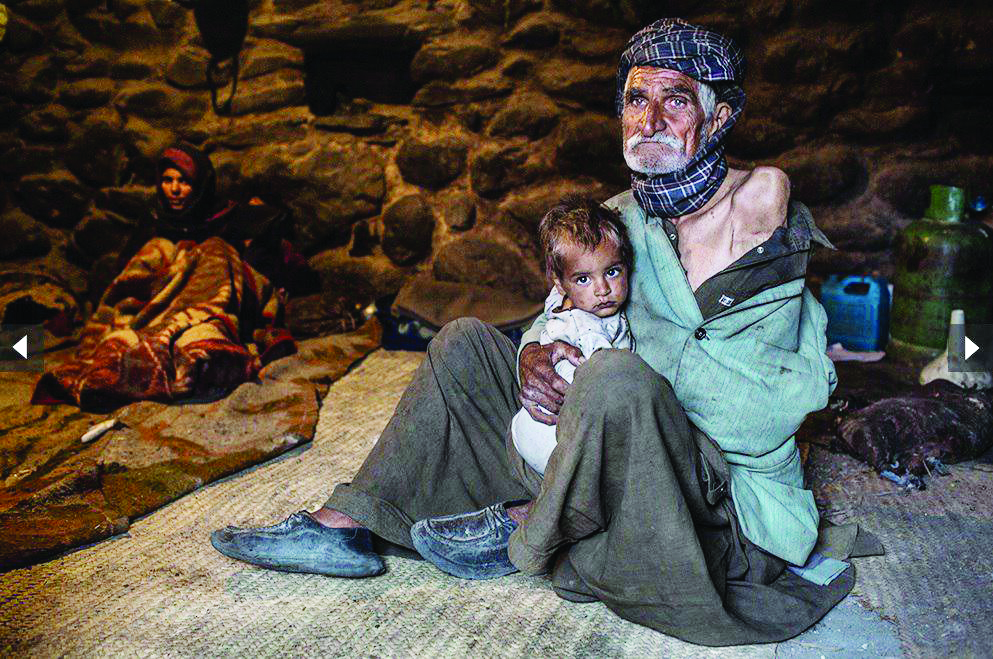



People around the globe are experiencing more intense heatwaves, deadly floods and wildfires as a result of climate change. Unless global emissions are cut, this cycle will continue.
1. Hotter, longer heatwaves
To understand the impact of small changes to average temperatures, think of them as a bell curve with extreme cold and hot at either end, and the bulk of temperatures in the middle. A small shift in the centre means more of the curve touches the extremes – and so heatwaves become more frequent and extreme.
“A small shift makes a big difference”. A line chart showing how small changes in the climate increases the probability of more hot weather and more extreme weather. Temperatures in the UK topped 40C for the first time on record, in July last year, leading to transport disruption and water shortage. The Met Office estimates the extreme heat is ten times more likely now because of climate change. And things could worsen.
“In a few decades this might actually be a quite a cool summer,” says Professor Friederike Otto, a climate scientist at Imperial College London. Heatwaves can be made longer and more intense by another weather phenomenon – a heat dome.In an area of high pressure, hot air is pushed down and trapped in place, causing temperatures to soar over an entire continent.
When a storm distorts the jet stream, which is made of currents of fast-flowing air, it is a bit like yanking a skipping rope at one end and seeing the ripples move along it.The Arctic is also warming more than four times faster than the global average in recent decades. In June 2020, average temperatures in Siberia were up to 10°C above normal, reaching a new record of 38°C in the Arctic circle. This triggered devastating wildfires and sea ice loss. The World Weather Attribution network (WWA), a collaboration between international climate scientist, concluded this was “almost impossible” without climate change. Scientists warn 2023 could be even warmer, as a climate phenomenon called La Niña – which has been suppressing global temperatures – has come to an end.
2. More persistent droughts
Making a direct link between climate change and individual drought events is challenging. A number of factors influence water availability, not just temperature and precipitation.But as heatwaves become more intense and longer, droughts are likely to worsen.Less rain falls between heatwaves, so ground moisture and water supplies run dry more quickly. This means the ground takes less time to heat up, warming the air above and leading to more intense heat. Demand for water from humans and farming puts even more stress on water supply, adding to shortages.
3. More fuel for wildfires
Wildfires can be sparked by direct human involvement – but natural factors can also play a huge part. The cycle of extreme and long-lasting heat caused by climate change draws more and more moisture out of the ground and vegetation. These tinder-dry conditions provide fuel for fires, which can spread at an incredible speed. Earlier this year the Chilean government put three regions on high alert for forest fires amid weeks of high temperatures.
Last summer, France, Spain, Portugal, Greece, Croatia and Albania experienced severe wildfires – with thousands of residents evacuated and several hundreds reported to have died.In 2021, Canada experienced heatwaves that led to fires which developed so rapidly and explosively that they created their own weather system, forming pyrocumulonimbus clouds. These colossal clouds then produced lightning, igniting more fires.
4. More extreme rainfall events
In the usual weather cycle, hot weather creates moisture and water vapour in the air, which turns into droplets to create rain. The warmer it becomes, however, the more vapour there is in the atmosphere. This results in more droplets and heavier rainfall, sometimes in a shorter space of time and over a smaller area. In 2022 floods hit Spain and also parts of eastern Australia. In a period of just six days Brisbane saw almost 80% of its annual rainfall, while Sydney recorded more than its average annual rainfall in little over three months. These rainfall events are connected to the effects of climate change elsewhere, according to Peter Gleick, a water specialist from the US National Academy of Sciences.. The weather across the globe will always be highly variable – but climate change is making those variations more extreme.
And the challenge now is not only limiting the further impact people have on the atmosphere but also adapting to and tackling the extremes we are already in,
Source: BBC news
Sunday, May 3, 2026
